Semiquincentennial Edition
Apple Pages doesn’t recognize “semiquincentennial” and keeps underlining it as misspelled. Not very patriotic, Apple.
(Apparently Pages wants me to hyphenate the word, but that looks weird and pedantic so I’m keeping it [allegedly] misspelled.)
After taking June off from posting, I’m easing back into things this week with a short list of recommendations focused on the semiquincentennial. Every publication in the United States (and many abroad) has put out something on the 250th celebration, and I quite honestly have many other things to do; I couldn’t read it all. So the links below are a somewhat scattered collection of whatever caught my eye, usually due to either the topic (interesting/quirky) or author (someone whose writing I know and trust).
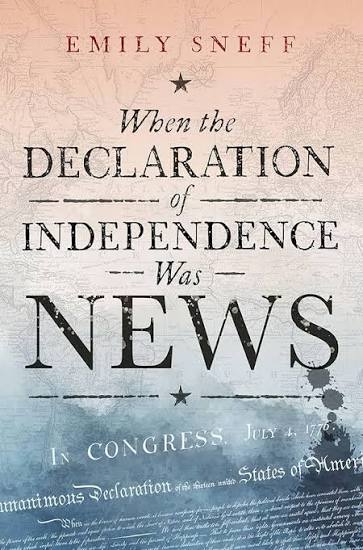
I also had a thematically appropriate book to read this weekend, thanks to my library hold coming in at just the right time. When the Declaration of Independence Was News, by historian Emily Sneff, is a deep-dive into how the document circulated through the colonies and across the Atlantic during the second half of 1776. From my review at The StoryGraph:
It took time for the Declaration of Independence to circulate. In an era before speedy telegraph communication—let alone the instant messaging of today—the document was either laboriously hand-copied or typeset, then sent via horse or ship to readers elsewhere. While Philadelphians heard about the declaration almost immediately after its adoption on July 4, 1776, news of the Continental Congress’s decision to sever ties with King George III moved along land and sea networks at an uneven pace over the following weeks and months.
I’ll be back to normal programming next Sunday. Thanks for joining me this week.
Recommendations
Claire Aubin and No Such Thing, Benjamin Franklin episode (This Guy Sucked podcast)
After the article ran and the harassment began, the people who gave tours on that mountaintop, the people whose job was to walk visitors through the house Jefferson built and the world the people he enslaved built alongside it, had to learn how to handle visitors who arrived with scripted provocations and hidden cameras. They had to learn what to do when someone stepped behind a sugar maple with a phone. They woke up to strangers in their in-boxes. They absorbed what the institution would not absorb for them. — Bridget Gillespie, “What Broke Monticello”
Morgan Jerkins, “It’s America’s 250th birthday. And Black Americans are sitting out the celebrations”
Sarah Lyall, “The Founding Father Who Sought a Last-Minute Deal to Avert the Revolution”
Among an endless array of tchotchkes, knick-knacks, trinkets, and schlock, was there a single item that truly captured the “spirit of 2026”? Could such an item even exist in our fragmented, algorithmic shopping age? I visited airport gift shops and mall kiosks, waded through online marketplaces filled with AI-generated retail sludge, got banned from Etsy, and talked to researchers, curators, and cowboy hat–wearing travelers to try to find out. — John Garrison Marks, “‘We Hold These Truds’: A Search For The Weirdest Piece Of America 250 Merchandise”
Viet Thanh Nguyen, “American Dream, American Nightmare”
Einav Rabinovitch-Fox, “Common Threads: The Commercialization of the U.S. Bicentennial”
Lizzie Skurnick, with photos by Lucy Lu, “The Fight to Fight: Black Soldiers in the Revolutionary War”
Ishaan Tharoor, “Why the Last Battle of the American Revolution Was Fought in India”
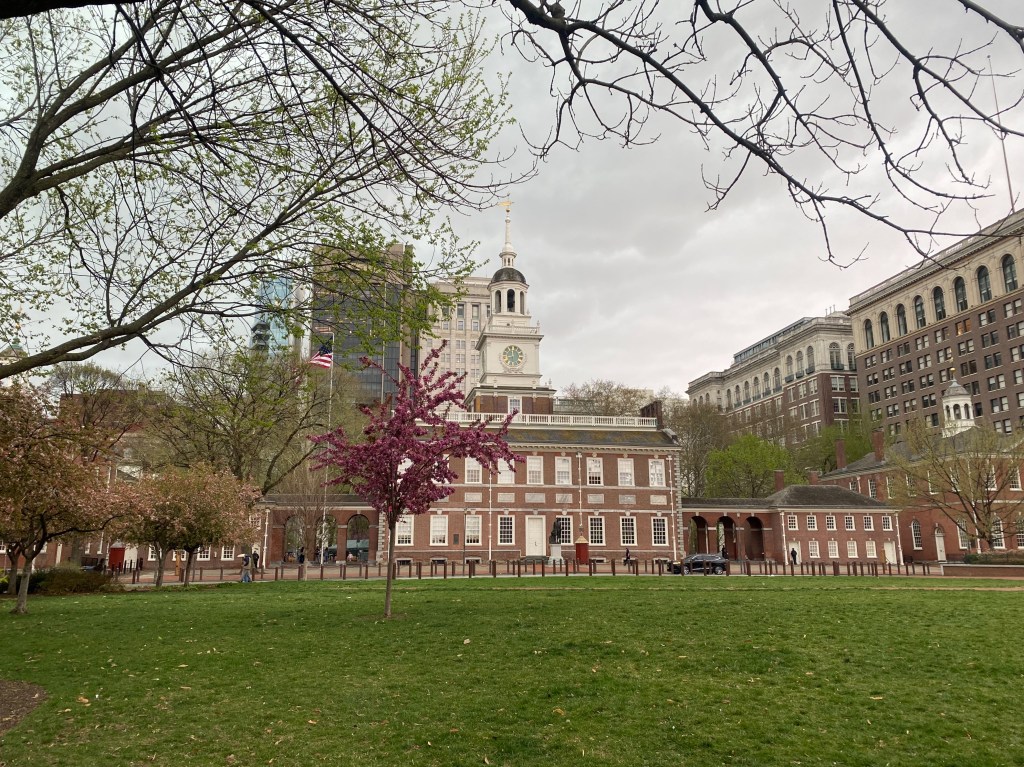
Featured photo: Independence Hall, Philadelphia, PA, April 5, 2026. (A repeat photo, but what’s more Fourth of July than Independence Hall?)


Leave a comment