Thanks for joining me this week.
Recommendations
China Stories
Chang Che, “Mistranslations at the Trump-Xi summit”
Chen Yiru, “Before WeChat, There Were Qiaopi Writers”
Rachel Cheung, Noah Berman, Savannah Billman, and Tom Mitchell, “Assessing the Summit”
J. Michael Cole, “After All the Noise: The Trump-Xi Meeting and What It May Mean for Taiwan”
Ella Creamer, “International Booker prize goes to novel originally written in Mandarin Chinese for the first time”
John Delury, “Not to Change China”
Emily Feng, “The foreign fighters who helped topple Assad — and why China worries about them”
Julian Gewirtz, “Trump Is Chinamaxxing: The visuals of a new phase of U.S.-China relations”
Amy Hawkins, “From sanctioned cars to beauty clinics, Russian rubles have flowed into China’s border towns since Ukraine war”
Tina Kanagarantnam, “Shanghai’s Lost Chinese City”
Chris Lau, with photos by Bertha Wang, “Can coffee thrive in the shadow of the city?”
Kevin Schoenmakers, “China’s Workers’ Literature Revival”
Wanderings Around the World
Maybe you’ve driven into a campground to find reserved signs on all the posts, but then watched the sites sit empty. I know I have. The Recreation.gov system was supposed to make it easier to access public lands, and to alleviate administrative work from federal land managers, who already have enough on their plates. Instead, it feels like a breaking point between the digital and physical worlds. — Heather Hansman, “Wreck Dot Gov”
Ju-min Park, Eduardo Baptista and Brenda Goh, “Even in North Korea, someone’s in your parking spot”
Susan Saulny, “A Family Secret No More”
Rory Truex, “Will AI Break the University?: Field Notes from a Tough Year”
Standout Stories
The “you don’t understand China” critique assumes that genuine understanding is achievable — through time, immersion, language, good faith. I think that’s broadly right. Area expertise matters. So does language, and historical depth, and real engagement with Chinese sources and scholarship. But understanding also requires access. It requires being able to ask questions and get honest answers, interlocutors who aren’t operating under surveillance or reporting obligations, archives that are open and statistics that are actually published. Over the past decade those conditions have been steadily degraded. — Andrew Stokols, “You Don’t Understand China!”
[China is] a dynamic place where topics, whether it’s a technology or an innovation, happen quickly and new trends develop very fast. There are also incredibly different experiences happening in China, whether in the urban core or in the rural countryside. And so when you’re there, you get to see the differences, the contrasts, how policies are implemented in some ways or not implemented in others, and the variety of ways in which individuals relate to new policies as they come out. A lot of these dynamics, nuanced and complicated, are best observed on the ground. A key recommendation in our report is not only that Americans should be going to China to study but also to emphasize the value of in-person exposure to our own understanding, whether it’s in academic, business, or government contexts. That in-person exposure is really what is most at risk right now. — Rosie Levine, speaking to Alice Liu about a new report issued by the US-China Education Trust on educational exchange between the two countries
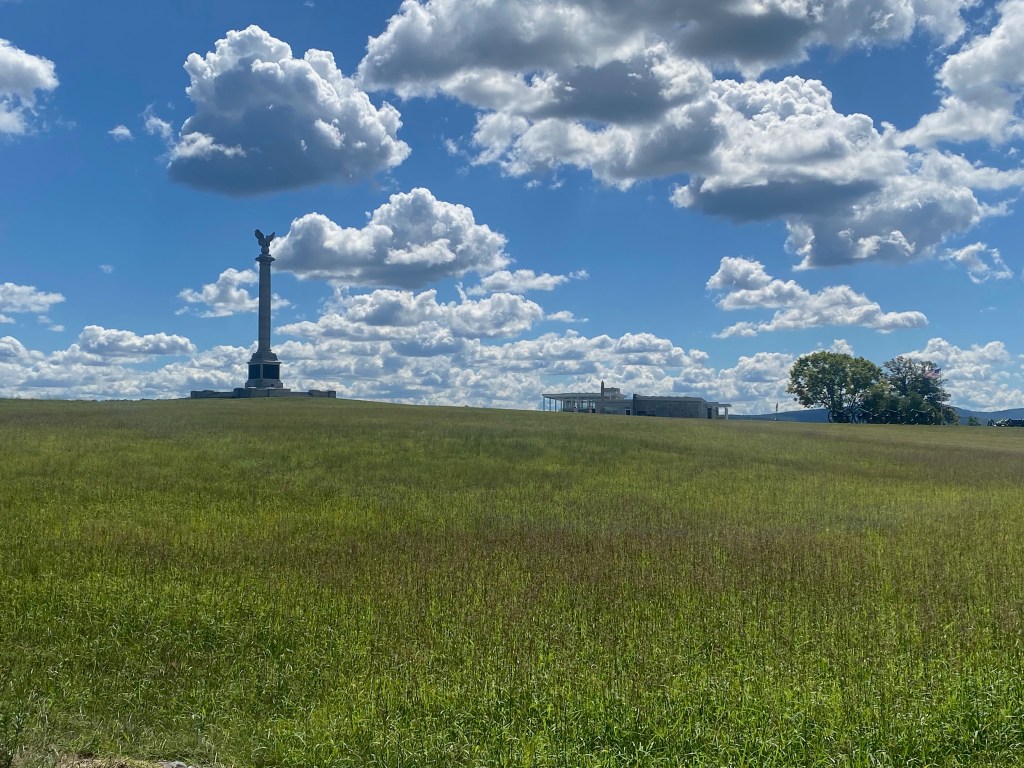
Featured photo: Antietam National Battlefield, August 26, 2025.


Leave a Reply