Back to the Archives
Because my job is largely office-based and administrative, I don’t often have the opportunity to stretch the archival research muscles I trained in graduate school. But I’ve long had the idea of digging into the Association for Asian Studies (AAS) historical archives, which are held at the Bentley Historical Library—just a short drive from my house, on the University of Michigan’s campus. I went to the Bentley a few years ago to get started, then had to abandon the project when more pressing tasks popped up. This year, though, is the 85th anniversary of the AAS, and my colleagues and I are working on several projects that have sent me back to the archives. I’m writing a series of posts for our #AsiaNow blog on AAS history and published the first two in April:
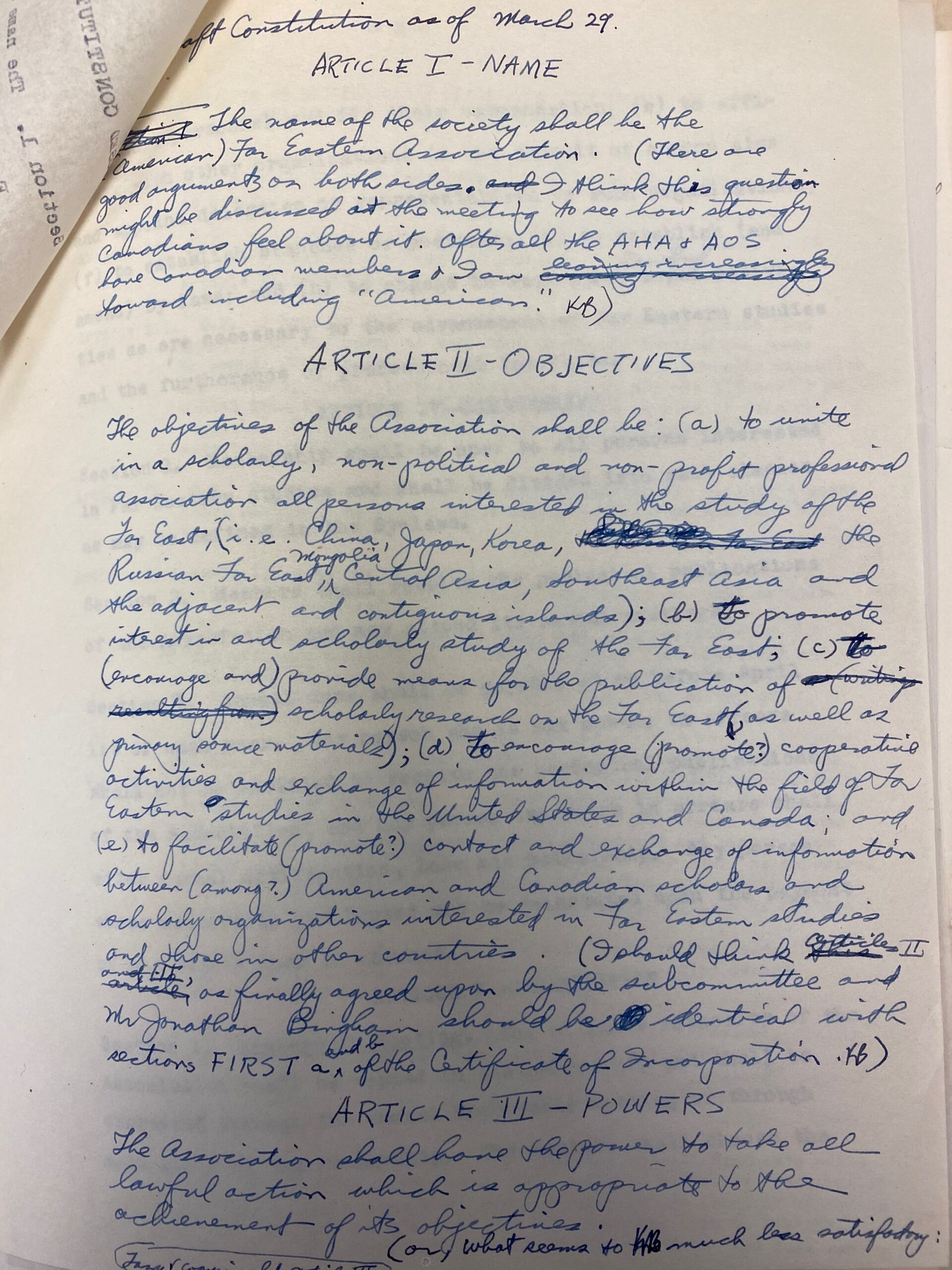
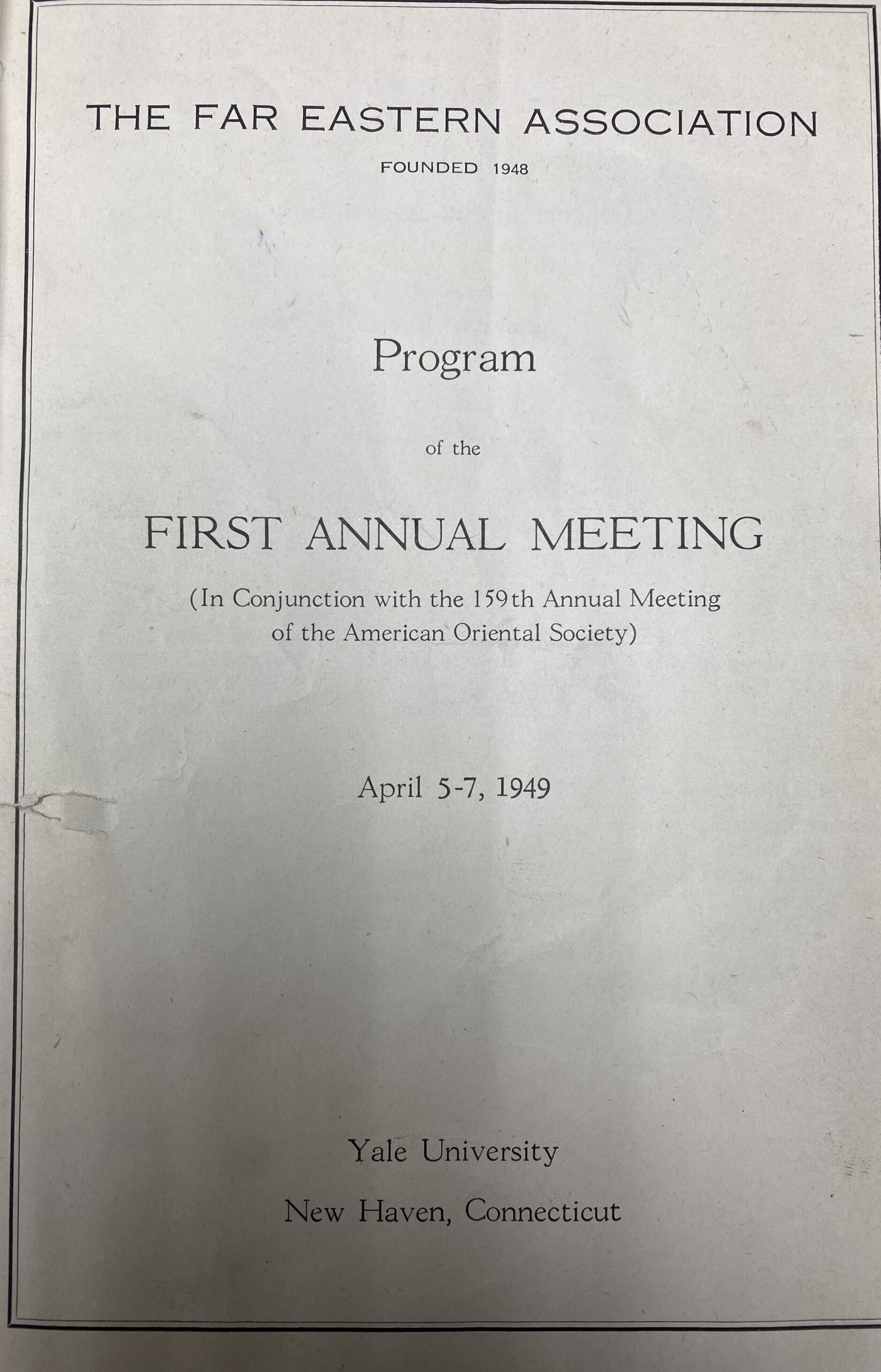
I already have two topics picked out for May and will link to those posts here once they’re published. After that … who knows? I’ll have to see what interesting tidbits of history those archival boxes yield.
Thanks for joining me this week.
Recommendations
China Stories
Selina Cheng, with photography by Fung Hoi Kin, “Ashes and memories: one family’s return to the site of Hong Kong’s worst fire in decades”
The Economist, “Hong Kong is a conduit for looted Chinese antiquities”
Vittoria Elliott and Zeyi Yang, “The Chinese Government Just Got the World’s Largest Digital Rights Conference Canceled”
If the leaders of China and America meet in Beijing in the middle of May as planned, look out for a tall, white-haired figure sitting immediately to the right of Xi Jinping, the Chinese president. Cai Qi may be the second-most powerful person in China. As Mr Xi’s right-hand man, in functional terms as well as seating plans, Mr Cai has insight into almost every area of policy and access to many of the Communist Party’s secrets. That makes him a person of substantial interest to American officials and to many other foreign governments. It also raises questions about his future, given Mr Xi’s tendency to sideline—or purge—even his closest allies. — Jeremy Page, “Cai Qi may be China’s second-most powerful man”
Jemimah Steinfeld, “Zambia censors an international conference…on censorship” and Danson Kahyana, “The postponement of RightsCon: Another case of the dragon’s hold on Africa?”
Andrew Stokols, “AI in Southeast Asia: beyond the U.S.-China rivalry narrative”
Neil Thomas and Shengyu Wang, “Xi’s Forever Purge: The Real Goal Behind China’s ‘Self-Revolution’”
Anjali Tsui, “Three Generations Lost: A Son’s Search for Justice After the Hong Kong Fire”
Vivian Wang, with visuals by Qilai Shen, “In China, Even Complaining About Property Management Can Be Political”
Li Yuan, with photographs by Chang W. Lee, “Defying the Censors Was Easy. Being a Good Comedian Is Harder.”
Wanderings Around the World
An important thing we need to understand about generative AI is that it is based on the stolen work of authors. Eight of my books were used to develop Anthropic AI. That’s two decades worth of work for which I have not been compensated, and even with the lawsuit I have linked to, I will still barely be compensated. When you use AI to generate your work you’re stealing the work of others. You may not care about that. I do. — Jami Attenberg, “What Are We Doing Here Anyway?”
Matthew Mpoke Bigg, John Eligon, and Zimasa Matiwane, with photographs by Ed Ram, “‘The Death Zone’: How Russia Is Luring Africans to Ukraine”
Jamison Foser, “Bruce Springsteen’s Chimes of Freedom”
Rahawa Haile, “List Full of Daggers: What we stand to lose when paperback nonfiction disappears”
Javier C. Hernández and Hisako Ueno, with visuals by Chang W. Lee, “Japan’s New Care Workers: Bodybuilders, Wrestlers and M.M.A. Fighters”
Kaanita Iyer, Piper Hudspeth Blackburn, and Aleena Fayaz, “‘We are killing them all over again’: Critics say history is being erased as Trump reshapes narratives at national parks”
Maris Kreizman, “‘Bridget Jones meets Slavoj Žižek.’ And Other Wild Book Pitches From My Inbox”
Jennifer Schuessler, with photographs by Tony Cenicola, “How a Radical Historian Saved the Schlock of ’76”
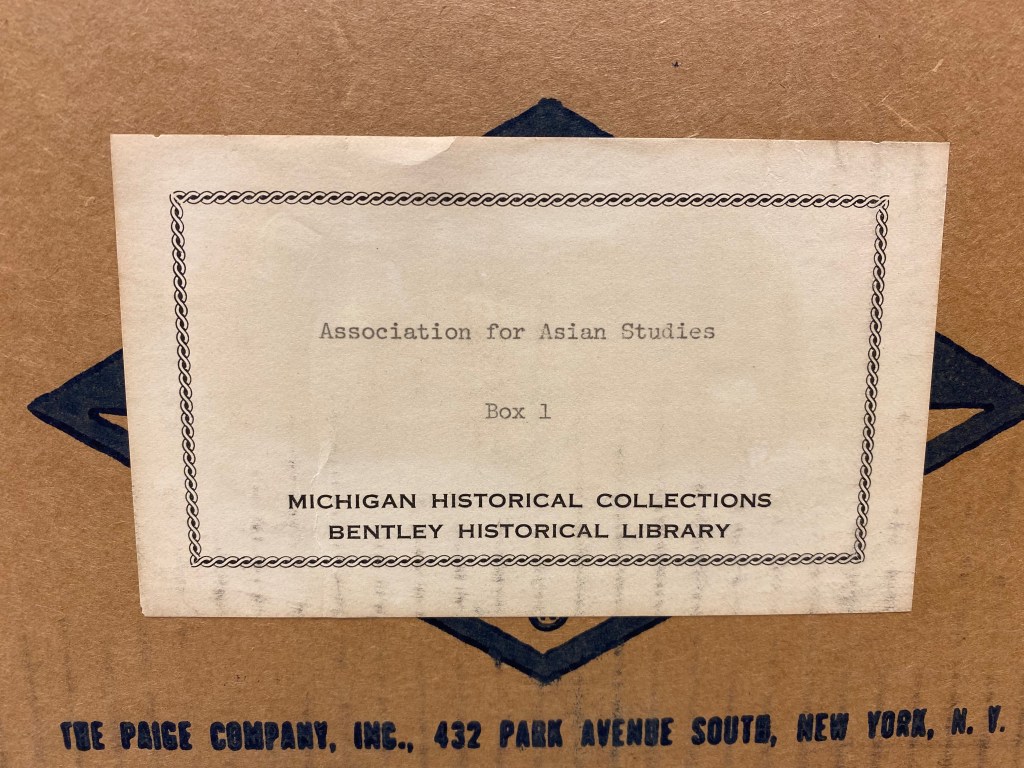
Featured photo: Box 1 of the Association for Asian Studies archival materials at the University of Michigan’s Bentley Historical Library, July 15, 2022.


Leave a Reply