
On Wednesday, May 28, U.S. Secretary of State Marco Rubio announced that the government would “aggressively revoke visas for Chinese students” and “revise visa criteria to enhance scrutiny of all future visa applications” from mainland China or Hong Kong. While what that means, exactly, is pretty vague, the overall message is clear: the Trump Administration is not interested in welcoming Chinese students to American campuses.
As commentator Kaiser Kuo titled a Substack post published shortly after Rubio made his announcement, this is “An Own-Goal of Historic Proportions”:
This will be framed, no doubt, as a national security measure. But no serious person believes this is about genuine risk mitigation. It’s about spectacle. It’s a gesture meant to placate a political base that’s been primed to see every Chinese student as a CCP sleeper agent, and every American university as a hotbed of un-American radicalism. It’s part of a larger campaign that, rather than diagnosing the real ailments of higher education or geopolitical rivalry, seeks only to punish and purge.
It is also a move that, in only two sentences, threatens to upend the lives of hundreds of thousands of Chinese students studying in the United States. These are students who have actively chosen to come here—leaving behind family, friends, and familiar rhythms of life—to pursue an education unlike what they could get in China. (Even Xi Jinping’s daughter is a Harvard graduate!) Now, they will spend the summer break figuring out if they can, or should, return to campus in the fall.
Many will go elsewhere, their goal of earning an American diploma taking a backseat to the trial of withstanding government hostility, paranoia, and bureaucratic hassles. Journalist Li Yuan interviewed a Chinese doctoral candidate in computer science about his next step, and he responded that he would likely look for work elsewhere after graduating. Why?
“America doesn’t feel worth it anymore.”
Thanks for joining me this week.
New #AsiaNow Author Interview
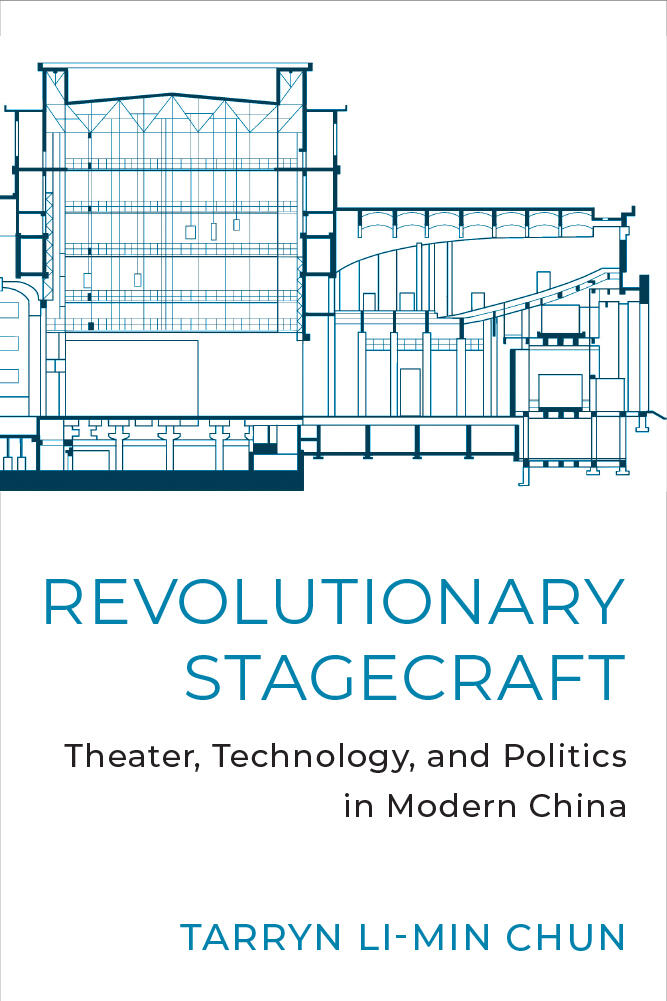
Theater, Technology, and Politics in Modern China
Recommendations
China Stories
Lucy Hornby, “The Life of Saint Xi”
Arthur Kaufman, “The Relationship Between Your Words and Justice in the World”
Kathleen McLaughlin, “Small Hands—and what that really means in factory work”
David Pierson, “How China Uses Work to Reshape Uyghur Identity and Control a Strategic Region”
Kurt Streeter, “Why the U.S. Opened Its Doors to Chinese Students, and Why Trump Is Closing Them”
Wanderings Around the World
Karla Adam, “Most new cars in Norway are EVs. How a freezing country beat range anxiety.”
Petula Dvorak, “These historians oversee unbiased accounts of U.S. foreign policy. Trump fired them all.”
Laura O’Connor, “The female keyboard warriors taking on Myanmar’s military junta”
Leah Willingham, “Harvard agrees to relinquish early photos of slaves, ending a long legal battle”
Featured photo: View of Sterling Memorial Library and Cross Campus, Yale University, New Haven, CT, by Carol Highsmith, 2011. Image via Wikimedia and in the public domain.
 Maura Elizabeth Cunningham
Leave a comment