Happy International Women’s Day! And boo to daylight saving time. This is not a weekend when I can easily lose an hour—because on Tuesday I’m flying to Vancouver for the start of my own personal Super Bowl, the Association for Asian Studies Annual Conference. My AAS colleagues and I are in full-tilt “get it done NOW” mode, making our final PowerPoints and responding to participant emails as fast as we can. We all really need that hour.
Even though the run-up to the conference is hectic, I love the event itself. It’s an opportunity to see friends from all over and to meet new colleagues entering the field. I usually score some cheap (or even free!) books. And even with all the problems plaguing academia these days, there’s an energy to our conferences that always sends me home confident that I made the right career choice. This year I also get to visit a new-to-me city, with a week of vacation in Vancouver following the conference.
If you’re at AAS, please say hi—I’ll be the redhead looking frazzled but goofily excited at the same time.
Thanks for joining me this week.
Recommendations
China Stories
One key lesson to emerge from these latest awards is that the efforts of Chinese journalists — even at state-run outlets, which accounted for half the prizes awarded — must not be overlooked. The awards and the work they recognize, which have appeared despite intense pressure at every level of China’s media control system, are a testament to that persistence. — David Bandurski, “A Prize Against the Odds”
Mark Chiu, “Is Winter Coming for Taiwan’s Media?”
China was alarmed by Iranians rising up in late December against their own government. The spectacle of a popular movement toppling an autocratic regime is precisely the kind of thing that makes officials in Beijing anxious. An airstrike that kills a political leader is, from China’s perspective, a more manageable event. It is easier to voice outrage at warmongering Americans. It is also possible to imagine various outcomes in Iran that might work to China’s advantage. — The Economist, “China’s Ice-Cold Calculus Over Iran”
Victoria Jones and Jeffrey Wasserstrom, “Beijing spins its narrative of history in today’s Hong Kong”
Austin Ramzy, “Why China Is Doing So Little to Help a Friend Under Fire”
Tian Jian, “Meet China’s One-Person Indie Outlet: New News CN”
Vivian Wang, “Where Are China’s A.I. Doomers?”
Wanderings Around the World
Alexis Coe, “I Tried AI, Part II: ‘Imitate Alexis Coe’”
Zach Dorfman, “They Came to Spy on America. They Stayed to Coach Little League.”
Big Bend is something different. Here, there is no proposal to harvest resources and no industry being served other than short-term construction. And unlike in other border regions, such as the stretch I described along the southern border of Organ Pipe National Monument, there isn’t even a credible security argument to hide behind. The southern edge of Big Bend National Park is one of the least-crossed stretches of the border—which is no surprise to anyone who has visited the place. The wall won’t make this border more secure, because the canyon walls, the desert heat, the sheer inaccessibility of the place already do that job. — Christopher Keyes, “Wall of Shame”
Jill Lepore, “Scandal, Protest, Goofiness, and Grandeur at the U.S. Bicentennial”
Jennifer Schuessler, “When DOGE Unleashed ChatGPT on the Humanities”
Standout Story
In many cases, Indigenous enslavement adds new dimensions to familiar histories of the Americas—and to some of their most famous actors. Christopher Columbus sold hundreds of Indians into slavery in Europe. Hernán Cortés owned hundreds of enslaved Indigenous people, more than anyone else in Mexico. The Pueblo Revolt, in 1680, during which Indians destroyed missions and churches and renounced their baptisms and Christian marriages, was a rebellion against the widespread enslavement of Pueblo Indians as much as it was a rejection of the Catholic Church. Tituba, one of the first women accused of being a witch in Salem, Massachusetts, was described by nineteenth-century chroniclers as a Black woman. Historians today, based on their readings of seventeenth-century documents, believe that she was an enslaved Indigenous woman from the Caribbean or South America. For Rael-Gálvez and other scholars, Indigenous slavery expands our understanding of the history of human bondage—who its victims were, where it took place, what it looked like, and when it ended. — Geraldo Cadava, “The Hidden History of Native American Enslavement”
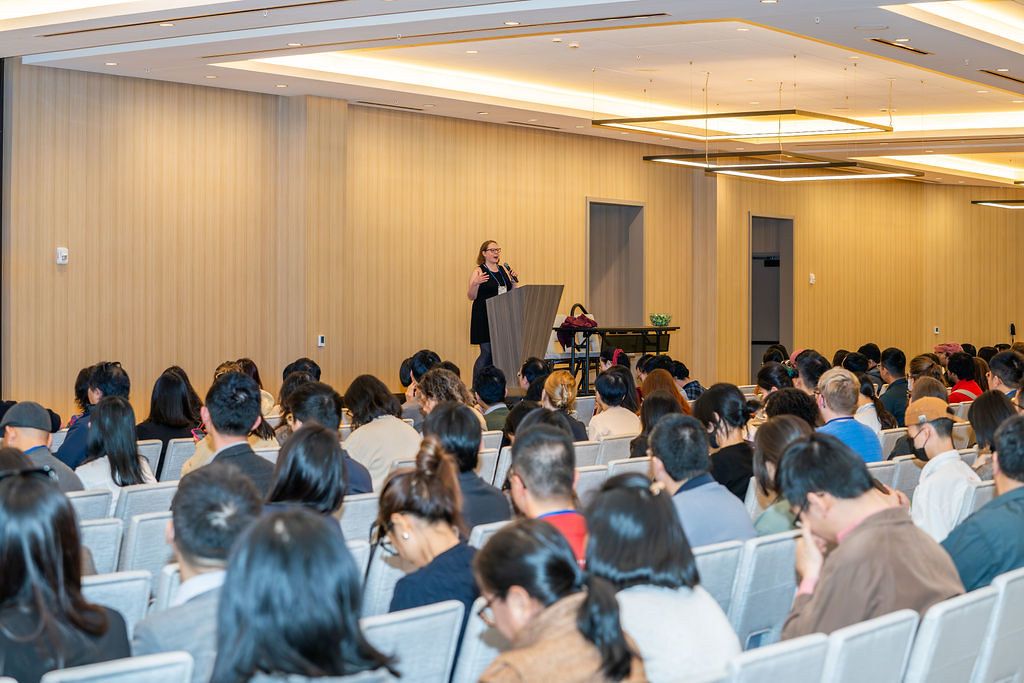
Featured photo: Me, leading the First-Time Attendee Orientation session at the AAS Annual Conference, Columbus, OH, March 13, 2025.
 Maura Elizabeth Cunningham
Leave a comment