Here we are—the shortest day of the year, and the final regular Weekly Wanderings post of 2025, although I’ll pop into your inboxes next Sunday with a year in review sort of thing. Thank you to everyone who has read, clicked, liked, subscribed, etc. I already have some writing lined up for 2026, both here and elsewhere, and look forward to sharing these pieces with you in the new year.
Thanks for joining me this week.🎄
New Goodreads Reviews
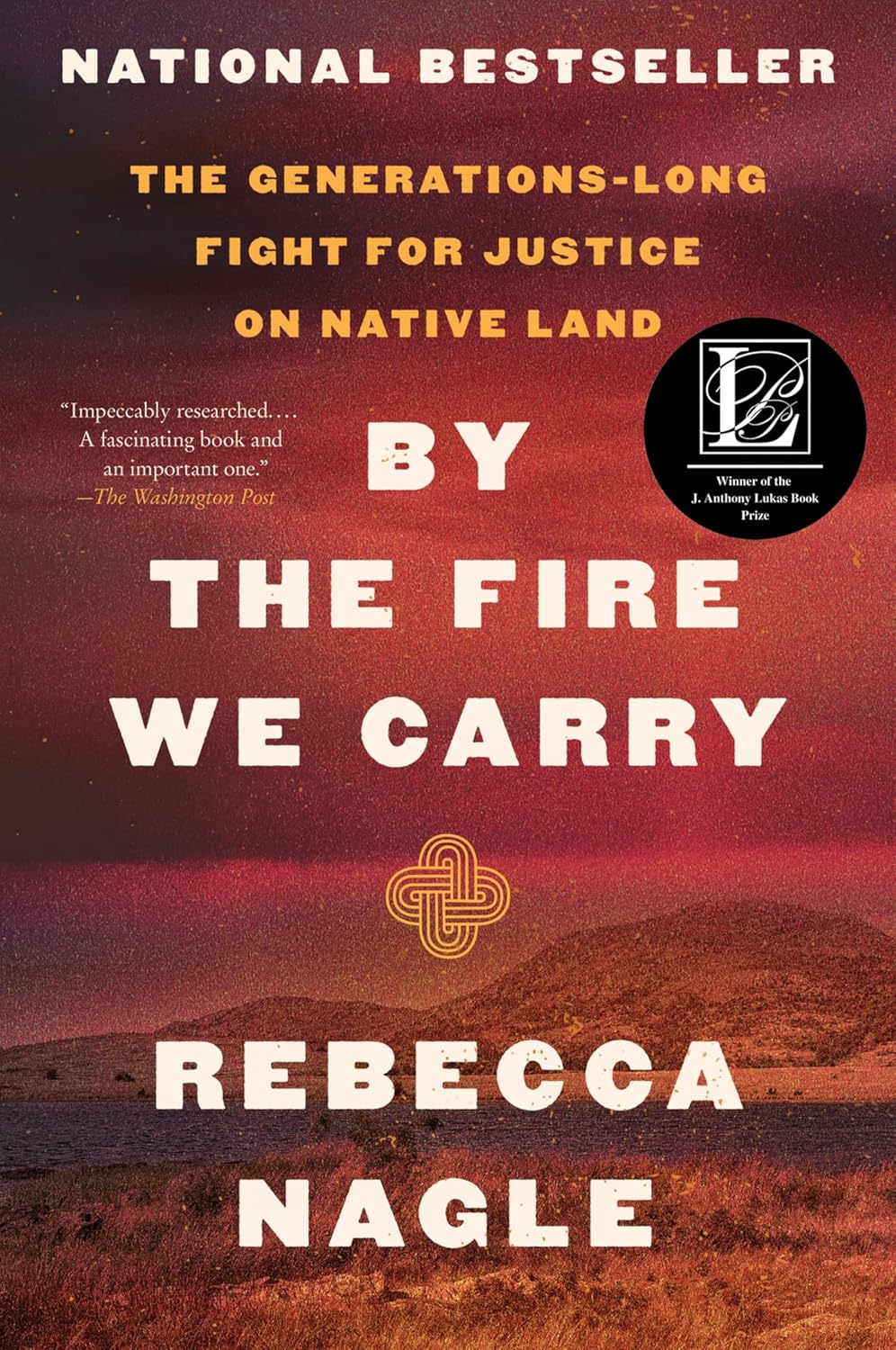
Last week I read two nonfiction books by Indigenous authors on history, identity, and land:

Recommendations
China Stories
Chris Buckley, “The Secret Trial of the General Who Refused to Attack Tiananmen Square”
Amy Hawkins, “Dashed dreams and land grabs: The rise of rural protests in China”
Lily Kuo, with photographs and video by Andrea Verdelli, “From Jail, He Tears Intricate Pictures By Hand For the Family He Misses”
Gigi Leung, “Hong Kong’s Shattered Idea of Home”
The market has grown so sophisticated, experts say, that at times Chinese parents have had U.S.-born children without stepping foot in the country. A thriving mini-industry of American surrogacy agencies, law firms, clinics, delivery agencies and nanny services—even to pick up the newborns from hospitals—has risen to accommodate the demand, permitting parents to ship their genetic material abroad and get a baby delivered back, at a cost of up to $200,000 per child.
— Katherine Long, Ben Foldy, and Lingling Wei, “The Chinese Billionaires Having Dozens of U.S.-Born Babies Via Surrogate”
Shibani Mahtani, “Jimmy Lai case shows how China is rewriting Hong Kong’s history”
James Palmer, “What’s It Like to Be a Chinese Soldier?”
Amy Qin and Chris Buckley, “He Recorded China’s Detention of Uyghurs. The U.S. Wants to Deport Him to Uganda.”
Yaqiu Wang, “I’m a Chinese pro-democracy activist. Here’s how to find courage to oppose Trump”
They cannot become journalists, and yet they perform the work of journalists; they have no news gathering and editing rights (新聞採編權), formally speaking, and yet must bear some of the most high-risk aspects of the news production chain.
— Xiao Bing, “China’s Invisible Journalists”
Wanderings Around the World
Before Russia’s full-scale invasion in 2022, Rashevska says she had been frustrated that the international community was not taking her evidence of forced displacement and deportation by the Russians seriously. She had become so disillusioned that she had even sent her portfolio to apply to art school. As a painter, she felt she might be able to be more effective in bringing about some of the conversations and change she wanted to see in society.
— Mélissa Cornet, “‘Law is the only weapon I have’: a Ukrainian lawyer’s campaign to rescue the children stolen by Russia”
Maris Kreizman, “What It Was Like to Publish a Book in This Crazy Year, 2025”
Standout Story
It is a new frontier of the same old struggle: The struggle to be seen, to be understood, to be granted the same presumption of humanity that is afforded so easily to others. My writing is not a product of a machine. It is a product of my history. It is the echo of a colonial legacy, the result of a rigorous education, and a testament to the effort required to master the official language of my own country.
— Marcus Olang’, “I’m Kenyan. I Don’t Write Like ChatGPT. ChatGPT Writes Like Me.”
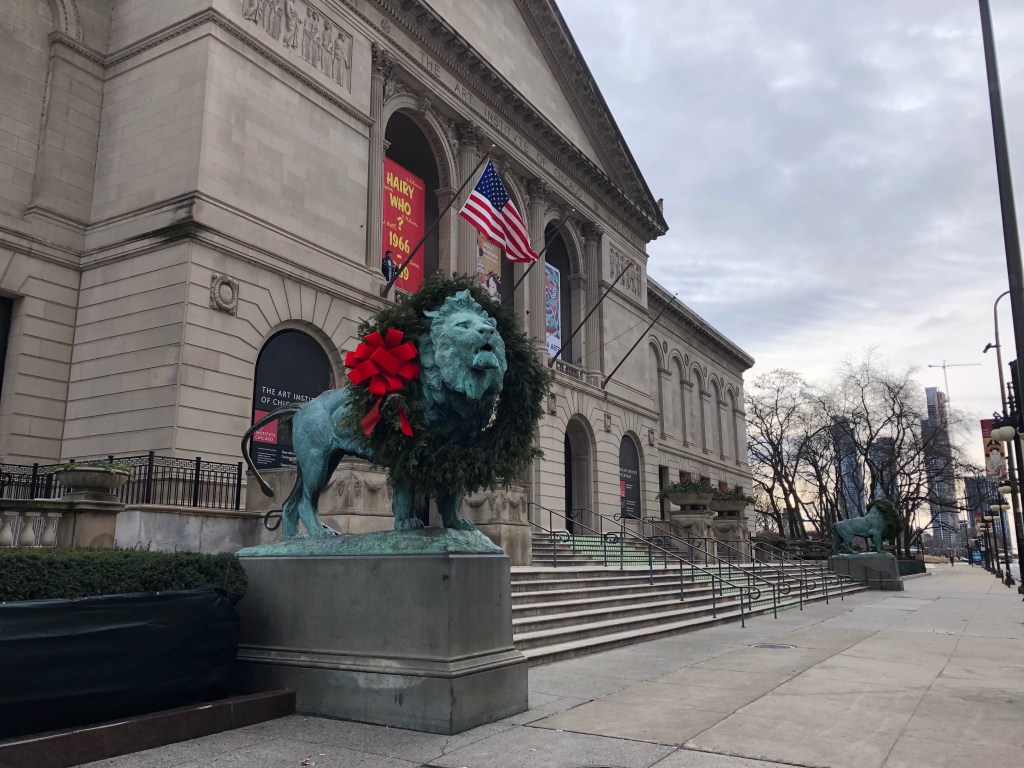
Featured photo: Art Institute of Chicago, January 6, 2019.
 Maura Elizabeth Cunningham
Leave a comment