A quick programming note up top today: I’m taking August off from Weekly Wanderings posts—this feels like a good time for a vacation, and I have a huge stack of novels calling my name.
Thanks for joining me this week—I’ll see you in September!
Recommendations
China Stories
Keith Bradsher, with photographs by Andrea Verdelli, “How a Chinese Border Town Keeps Russia’s Economy Afloat”
Diego Ge, “The Only Chinese Bookstore in D.C. w/ Yu Miao”
Veronique Greenwood, “A Professor’s Hunt for the Rarest Chinese Typewriter”
Mara Hvistendahl, “China Flexes Muscles at U.N. Cultural Agency, Just as Trump Walks Away”
Kat Lonsdorf and Tom Bowman, “State Dept. cuts China experts as administration says countering Beijing top priority”
Shaun O’Dwyer, “Princeton University Press Stumbles Into a Xinjiang Tour Debacle”
Lijia Zhang, “The Best 20th Century Chinese Fiction Books”
Wanderings Around the World
Christopher Cox, “What if Everything We Know About Sacagawea Is Wrong?”
James Forde, “In Syria, Former Warriors Build a New Home for Orphans”
Lee V. Gaines and Geoff Stellfox, “How 3 Muslim sisters helped change the rules of American women’s wrestling”
Charlotte Higgins, “Inside the ghost museums of Ukraine: exhibits replaced by fragments of war and occupation”
Anu Kumar, “When a unique university on a ship sailed up to India for ‘cultural immersion’”
Gabriel N. Rosenberg, “Are Species Timeless? Talking With Bathsheba Demuth About the Arctic”
Standout Story
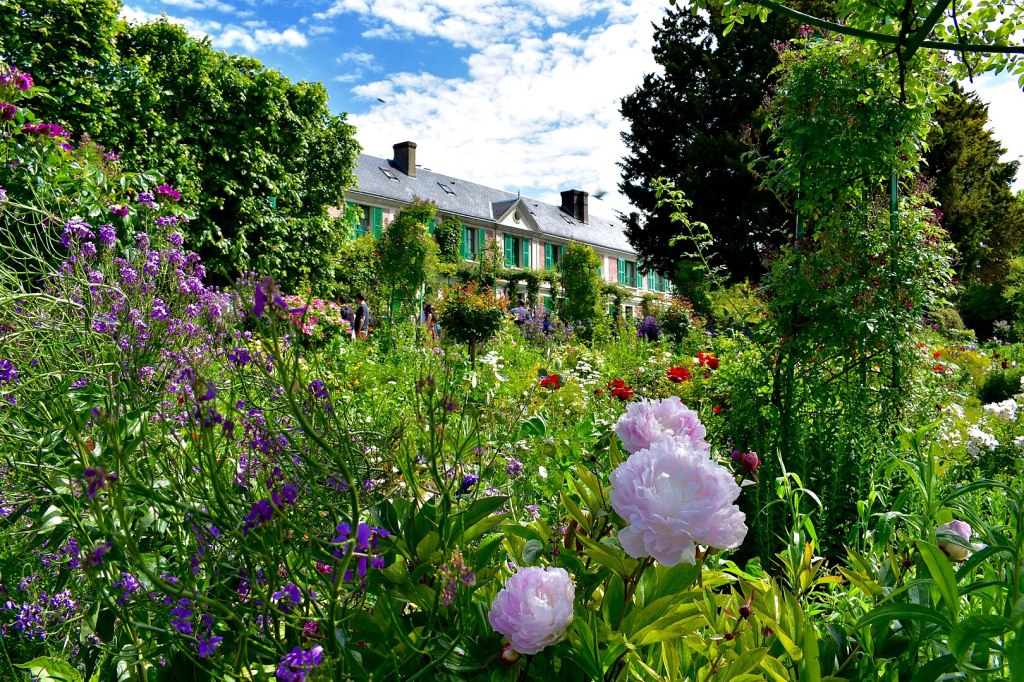
As with fashion, people’s tastes in flowers evolve. When the impressionist painter moved to Giverny in 1883, nurseries brimmed with Victorian flowers—Cry violets, cosmos, lilies and gladioli. Many of his favored varieties have since gone extinct or been drastically altered as people clamor for both hardier plants and flowers with ever-increasing blooms. Pansies, which once grew only to the size of bottle caps, have been cultivated to grow to the size of saucers. Seed suppliers coping with shifting demands and differing swarms of pests often hone gangly flowers into shorter versions better suited to global transport and survival.
— Kelly Crow, “The Last Living Monet”
Featured photo: “Claude Monet’s home, nestled behind his garden, in late spring at Giverny, France,” by Wikimedia user La salonniere, used under a Creative Commons license.
 Maura Elizabeth Cunningham
Leave a comment