Thanks for joining me this week.
Recommendations
China Stories
The Chinese students I spoke with were intently parsing official edicts in an effort to work out which course subjects were sensitive and which weren’t. What I detected from my conversations with them was their sense of being caught in a guessing game. A formerly innocuous decision about whether to leave the U.S. for a trip now seemed like a high-stakes gamble. In the country that they had believed offered the freest and most resource-rich research environment, they were now carefully policing their own discourse. Back in China, students know the score, but they never expected to be contending with these worries in the United States. In its nationalist rhetoric and sweeping use of state-security justifications, the U.S. was starting to mirror aspects of the very system it has long denounced.
— Lavender Au, “Chinese Students Feel a Familiar Chill in America”
Noah Berman, “Julian Gewirtz on Getting China Strategy Right”
Yangyang Cheng, “Legacies of Covid-19” — inaugural episode of her new Gateway to Global China podcast
Josh Chin and Niharika Mandhana, “China Steals Language and Home Life From Tibetan Kids as Young as 4”
Ding Rui, “China’s Next-Gen TV Anchors Hustle for a Job AI Is Already Doing”
Amy Hawkins, “‘Will AI take my job?’ A trip to a Beijing fortune-telling bar to see what lies ahead”
When the PRC and I first met, we were both young. Now, it feels like the PRC is settling into a long middle age.”
— Lucy Hornby, “China: The Nostalgia Tour”
William Hurst and Peter Trubowitz, “The Fantasy of a Grand Bargain Between America and China: Why Deadlock Is More Likely Than Détente”
… the Hu Feng case was significant as the Chinese Communist Party’s first brutal crackdown on the intellectual and cultural spheres after establishing its power. Preceding the Anti-Rightist Movement, the Hu Feng case can be considered the prelude to a large-scale purge of intellectuals. Seventy years later, re-examining the Hu Feng case and revisiting its themes of revolution and backlash, loyalty and betrayal, guilt and self-reflection, each topic offers a clearer understanding of the nature of totalitarian politics.
— Ma Qinuo, “Revisiting the Hu Feng Case 70 Years Later: Storm under the Sun and a Baseless Literary Inquisition”
Tiffany May, “They Demanded Democracy. Years Later, They Are Still Paying the Price.”
Katrina Northrop, “Dalai Lama lays out succession plan, denying Chinese efforts at control”
Vivian Wang, “Chinese Police Detain Dozens of Writers Over Gay Erotic Online Novels”
Wanderings Around the World
Anne Helen Petersen, “The Cost of Being Undocumented” — interview with Alix Dick and Antero Garcia about their new book by the same name
Standout Story
Most people know that China censors its internet. They’ve probably even heard of the “Great Firewall,” the clever moniker popularly used to describe that censorship. But despite its increasing impact on our online lives, most people outside China don’t understand how this information control system really works. What does it consist of? How effective is it? What is its ultimate purpose? And how much does it alter the internet in the rest of the world?
— Jessica Batke and Laura Edelson, “The Locknet: How China Controls Its Internet and Why It Matters”
(Disclaimer: I was on the team that copy-edited and fact-checked this project. But it’s great, and well worth your time if you want to understand the technical side of how Chinese internet censorship works—and how it affects people everywhere.)
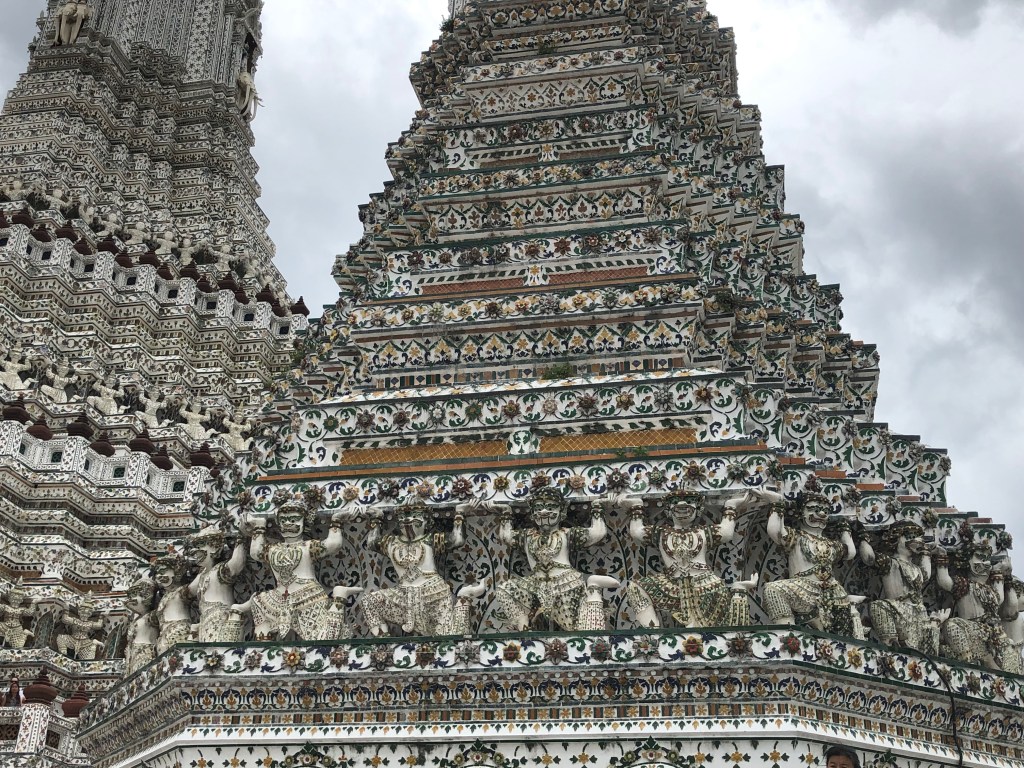
Featured photo: Tile work on pagoda exteriors at Wat Arun, Bangkok, Thailand, July 4, 2019.
 Maura Elizabeth Cunningham
Leave a comment