
After the relationship between American two-time divorcée Wallis Simpson and Britain’s King Edward VIII became public knowledge in December 1936, rumors about Simpson’s past flew thick and fast. One alleged source was the so-called “China Dossier,” a British government file (likely apocryphal) said to include prurient details about the year Simpson had spent in Hong Kong, Shanghai, and Beijing at the end of her first marriage, in 1924-25. What had Wallis done while in China? Take your pick: gambling, opium addiction, prostitution, affairs with men, affairs with women, opium dealing, manipulation of high society contacts for her own financial benefit, study of exotic sexual techniques … the gossip seemed to have no bounds.

Paul French takes on the China Dossier in his new account of Wallis Simpson’s China sojourn, Her Lotus Year: China, the Roaring Twenties, and the Making of Wallis Simpson. French has carefully traced Wallis’s travels along the China coast, recounting her likely activities—and, what’s more, what she likely did not do—at every stop. In lively, detailed prose, he recreates not only the elevated expatriate world of that time, but also the war-torn country just beyond that privileged bubble. In the end, French argues, that China year proved pivotal, the bridge between Wallis Warfield Spencer, low-level Baltimore socialite and U.S. Navy wife, and Wallis Simpson, future Duchess of Windsor, the elegant woman who moved in London’s high society and induced a king to abdicate his throne for the sake of their relationship.
Wallis Spencer set off for Hong Kong in the late summer of 1924 in a last-ditch effort to save her troubled marriage to Win Spencer, a naval officer and abusive alcoholic whom she had married eight years prior. Spencer claimed that he had achieved six months of sobriety while on duty in Hong Kong; after her arrival in the British colony, however, Wallis quickly found that little had changed for either Win or their relationship. By November she was again on the move, boarding a ship destined for the treaty port of Shanghai, where Wallis hoped an American court might grant her a divorce. The Shanghai court had no such power, however, and the sensible choice for Wallis would have been to find passage on a ship back to the United States. Getting her personal and legal matters resolved quickly would have been only one reason to depart China at this time. Much more seriously, China was a country at war, torn apart by regional military commanders (“warlords”) each seeking to establish their own base of power.
Yet Wallis continued her China travels, a decision that French explains with a logical and persuasive argument: that thanks to her U.S. Navy connections, Wallis served as an informal courier, carrying documents from one city to the next. The evidence for this is anecdotal, but compelling. French cites examples of the Navy going out of its way to ensure that Wallis reached her next destination, where she was invariably met upon arrival by high-ranking officers. Additionally, although Wallis had only modest financial resources of her own, she was able to stay in the best hotels China had to offer—possibly on the Navy’s tab. “There is ultimately no other sensible way,” French concludes, “of explaining Wallis’s itinerary across China from Hong Kong in late 1924 and 1925 than the suggestion that she agreed to transport documents for the US authorities in Hong Kong and mainland China.”
These courier tasks might explain why Wallis departed Shanghai and headed north, first to Tianjin and then on to Beijing. Arriving in the country’s capital in mid-December 1924, she remained there for the following six months—first residing at the Grand Hôtel de Pékin, then (perhaps after her Navy support dried up) moving into the also-grand hutong home of her friends, Kitty and Herman Rogers. As the Rogerses guest, Wallis was introduced to the foreign diplomats, businesspeople, and adventurers who made Beijing their home. But while Wallis definitely lived a luxurious life in the city, she did not remain entirely secluded in the expatriate world. In part, this was due to her perilous financial circumstances, which required supplemental income. Wallis first relied on her skills at the bridge and poker tables (gambling was one China Dossier allegation grounded in reality), then began prowling the city’s early morning markets in search of antiques and objets d’art that she could in turn sell to other members of the foreign community. These shopping excursions honed an appreciation for Chinoiserie that would influence Wallis’s personal taste long after her time in China ended.
Her months in China, especially in Beijing, ultimately seems to represent a transitional period in Wallis’s life. Even with the chaos of warlord battles in the background, and occasionally much closer, Wallis was able to enjoy weekends with the Rogerses in the Western Hills and tea dances on the rooftop of the Grand Hôtel; she frequented the horse races and had a fling with an Italian naval officer. Wallis herself later named the time her “lotus year,” invoking the lotus-eaters of Homer’s Odyssey, whom French describes thusly:
Pleasantly marooned on an island, in an altered state and isolated from the rest of the world, they live a life of indolence and peaceful apathy, free of practical concerns.
As French shows, Wallis was not entirely isolated from the world, nor wholly free of practical concerns, during her China sojourn—but it still must have seemed calm and idyllic after the tumultuous years of her marriage to Win Spencer. Though by all accounts she enjoyed her time in the country, Wallis never intended to remain in China indefinitely; the matter of obtaining a divorce remained to be handled back in the United States. Shortly after her twenty-ninth birthday in late June 1925, Wallis set off on the long journey home.
Why, just over a decade later, would this lotus year supply so much fodder for gossip and speculation? French sees the racism and Sinophobia of British society as the basis of the China Dossier rumors:
In the first half of the twentieth century, images of the “heathen Chinee,” the fleshpots of the Far East, the “Yellow Peril” and “white slavery” east of Suez were rampant. The notion that sojourners in the East somehow jettisoned their moral compasses as soon as they stepped ashore reached the common reader and cinemagoer through countless plays, short stories, novels, and films. Travelers in the East, especially white women, went bad out there, if they weren’t already prone to moral rot and therefore attracted to the Orient in the first place.
Tales of dissolute days in Hong Kong and China also invoked another stereotype associated with China: the Dragon Lady. Depictions of Wallis in 1924-25 as scheming and calculating, amoral and sexually deviant, implied that she had always been such and suggested that she had somehow ensnared Edward VIII in her trap.
Wallis was, to be sure, no saint, and French perhaps goes too far in working to restore her reputation. But in systematically refuting the China Dossier allegations and emphasizing Wallis’s own account of her China travels, he rolls back the years and presents her as she was during that time: newly independent and somewhat unsophisticated, living in a foreign country and uncertain of what lay ahead. Her Lotus Year, in its depictions of Wallis Spencer and the China she lived in, offers readers detailed and dynamic portraits of both woman and country.
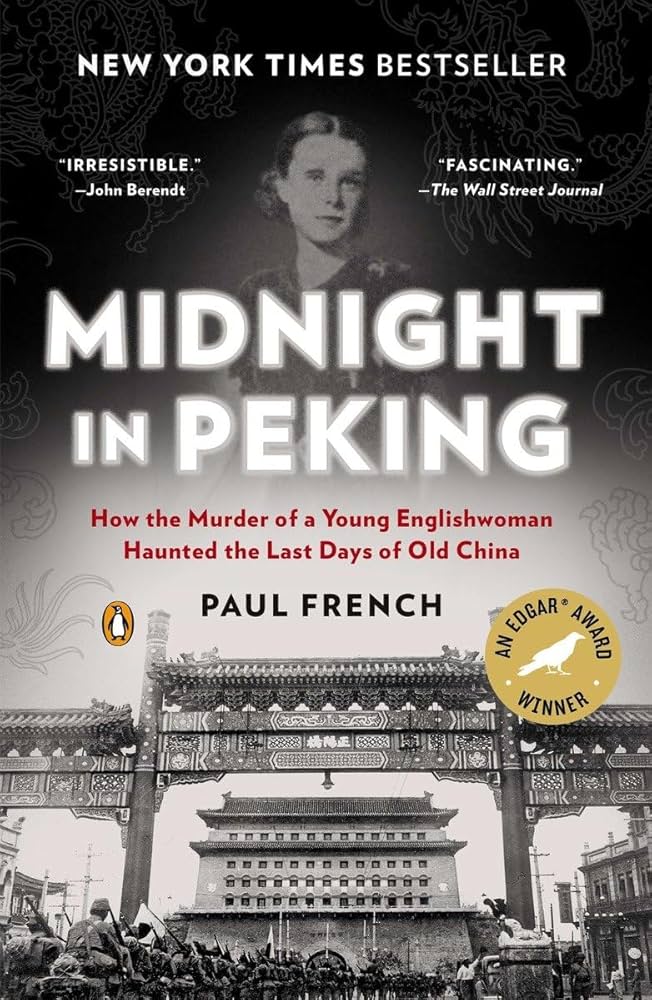
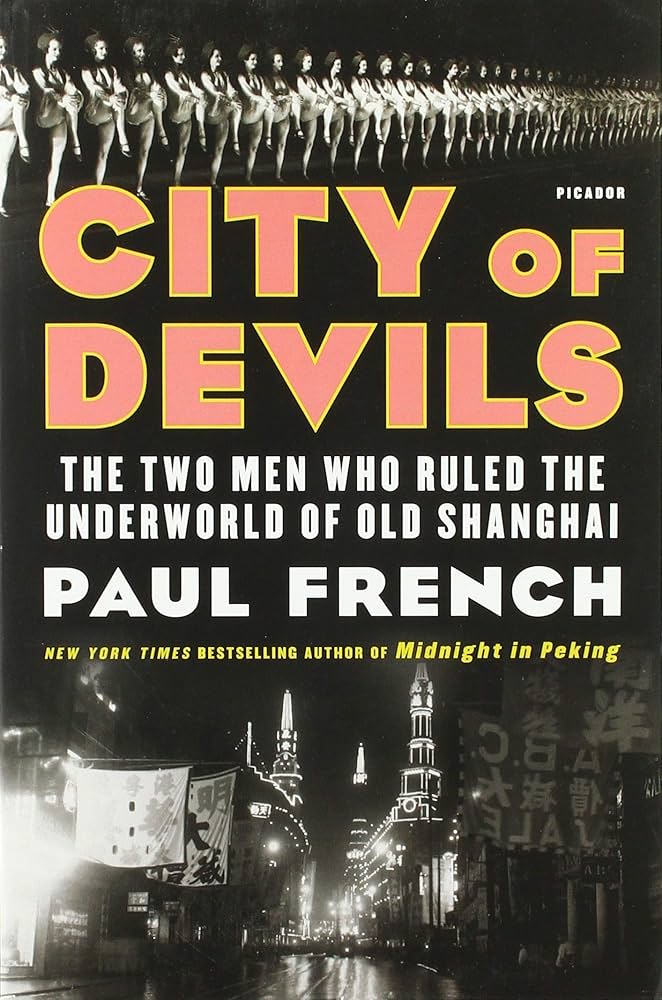
My reviews of Paul French’s previous books
Featured photo: Dongsi Pailou, Beijing, 1920. Image in the public domain, via Wikimedia
 Maura Elizabeth Cunningham
Leave a comment