
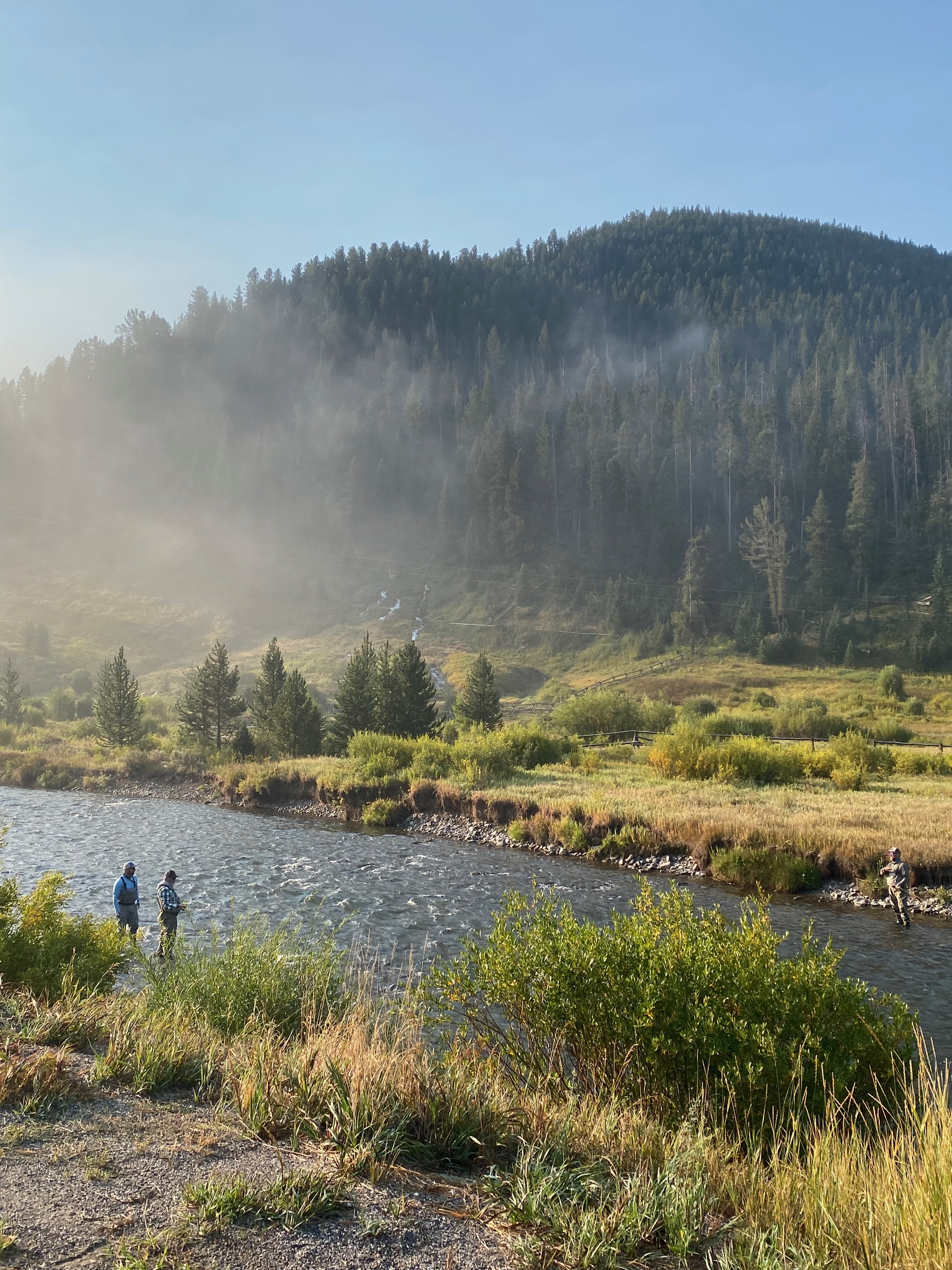
Yellowstone isn’t a place conducive to following a strict itinerary. Parking lots fill, traffic stops unexpectedly to wait out animals crossing the road, and geysers don’t always erupt on schedule. It’s possible, I learned, to make a general plan, but there’s a good chance it will be altered in response to circumstances. I realized after only a few hours in the park that it’s best to go in with a full gas tank, plenty of snacks, and a flexible attitude.
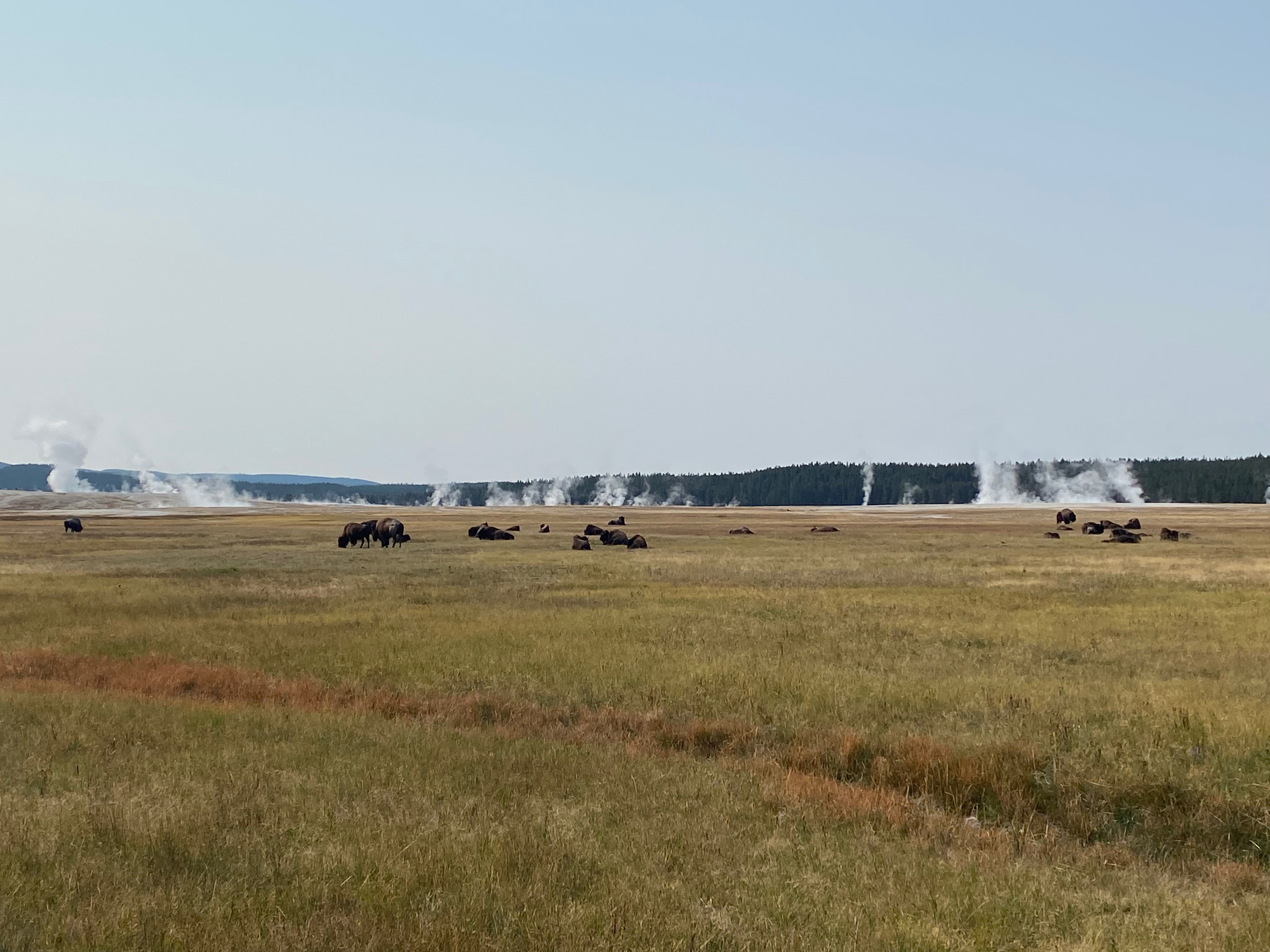
I drove to Yellowstone from Bozeman, Montana, following the gorgeous Gallatin Valley route down through Big Sky to the park’s west entrance. The road into the park, and the first section of the Grand Loop Road south from the turnoff at Madison Junction, is beautiful—I passed sparkling rivers and lush foliage, mountains rising in the background. But nothing prepared me for the otherworldly experience of entering the geyser basin, when I suddenly started seeing huge plumes of steam rising like smokestacks on the horizon. The occasional herd of bison resting not far from the road, immense even at a distance, only added to the feeling that I had crossed from a standard-issue park to something much more mysterious and fascinating.
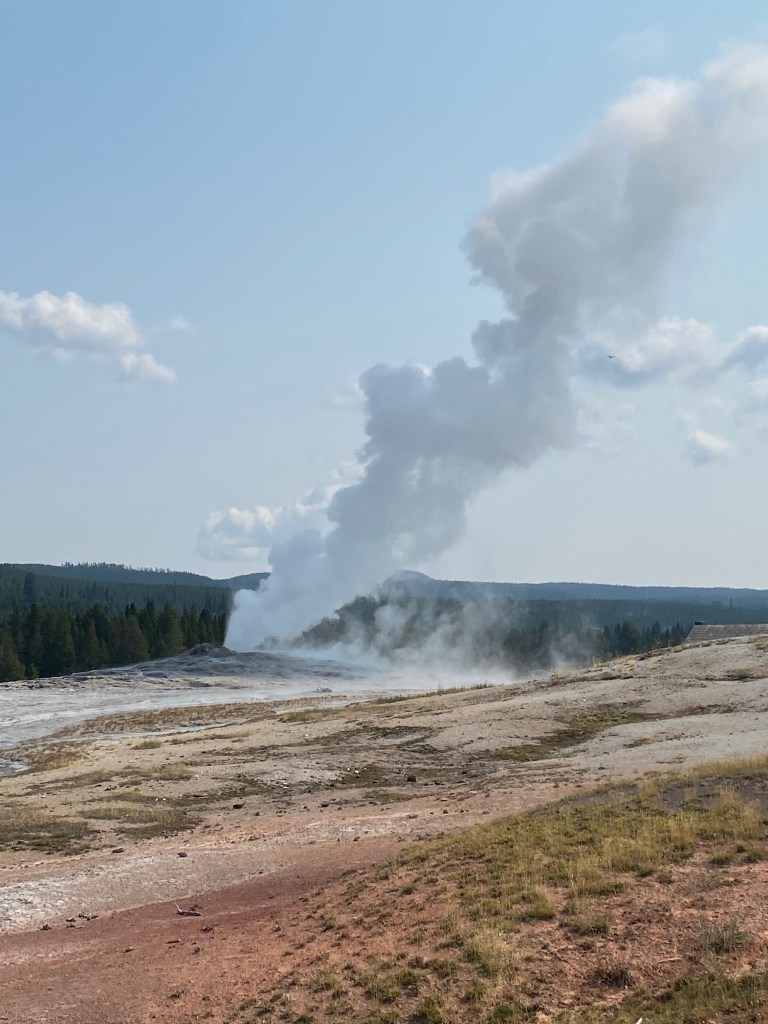
The most famous geyser, of course, is Old Faithful. I saw it erupt two or three times during my trip, joining hundreds of other spectators on a semicircle of benches to watch it spout water and steam up into the air. Old Faithful’s is the most frequent and predictable of the geyser eruptions, and its placement at the edge of the Upper Geyser Basin has enabled the park to build infrastructure (a large visitor center and immense parking lot) around it, making it accessible to all. But—with no disrespect to OF—I thought the other geysers and geothermal features in the area were much more interesting.
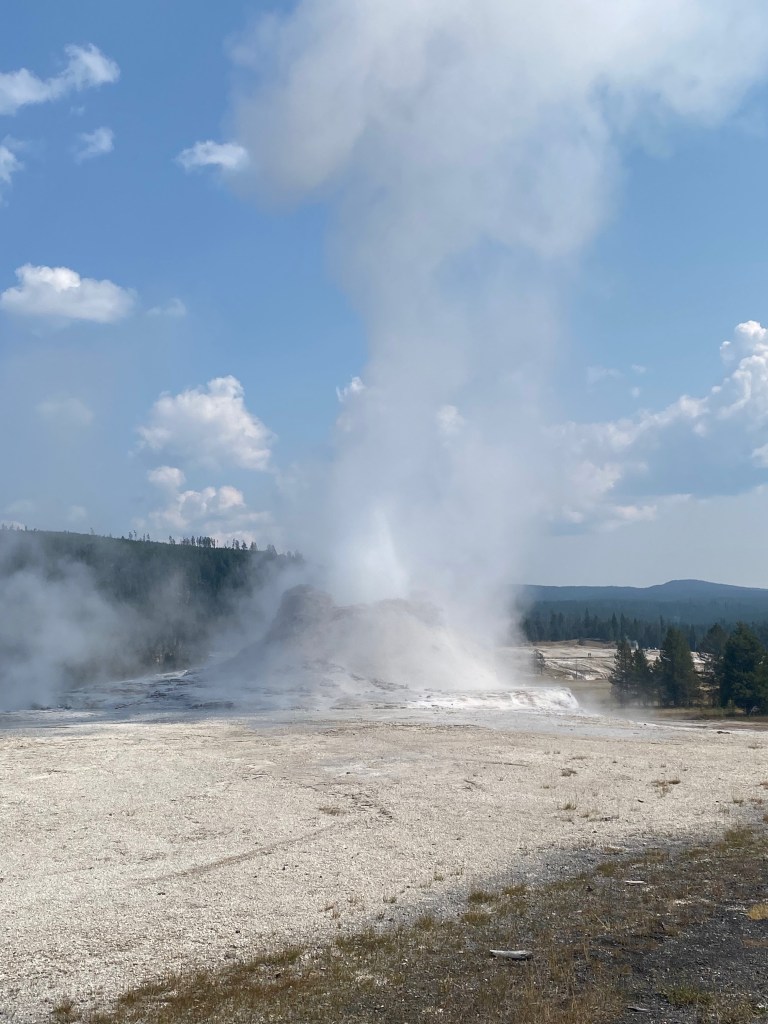
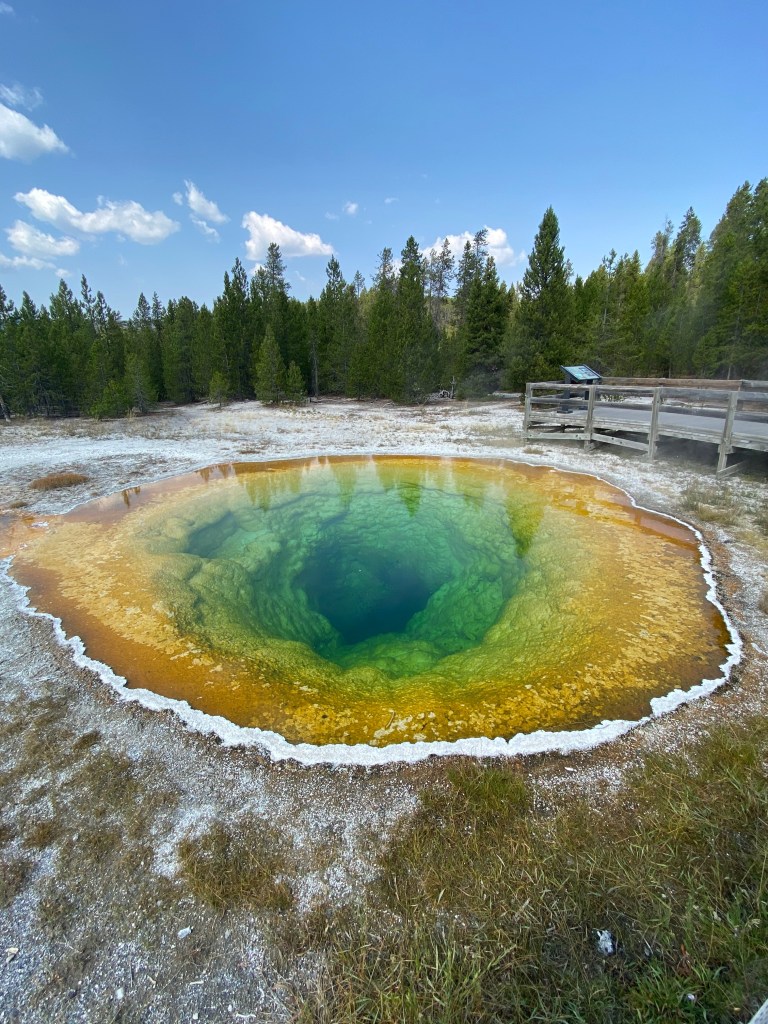
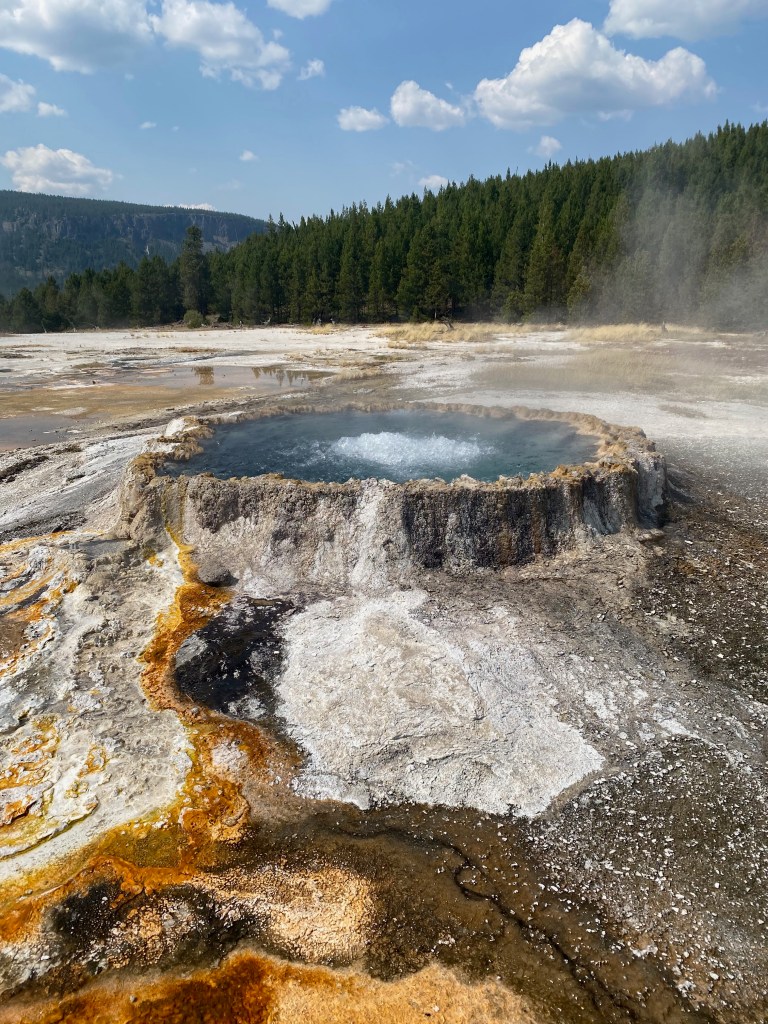
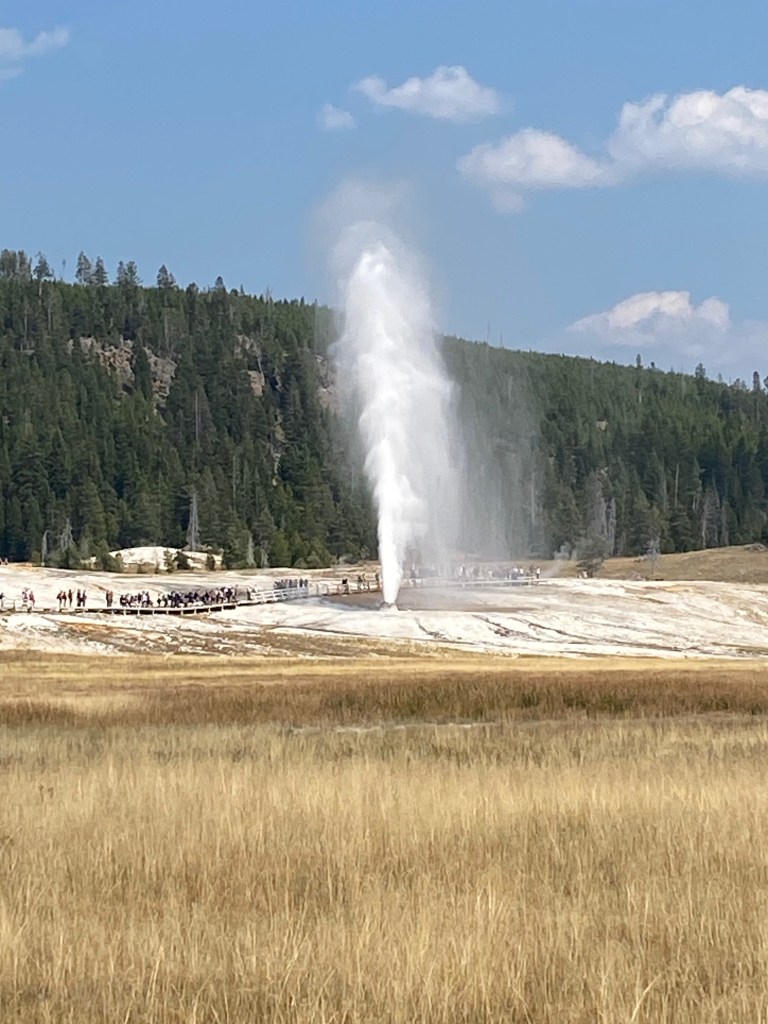
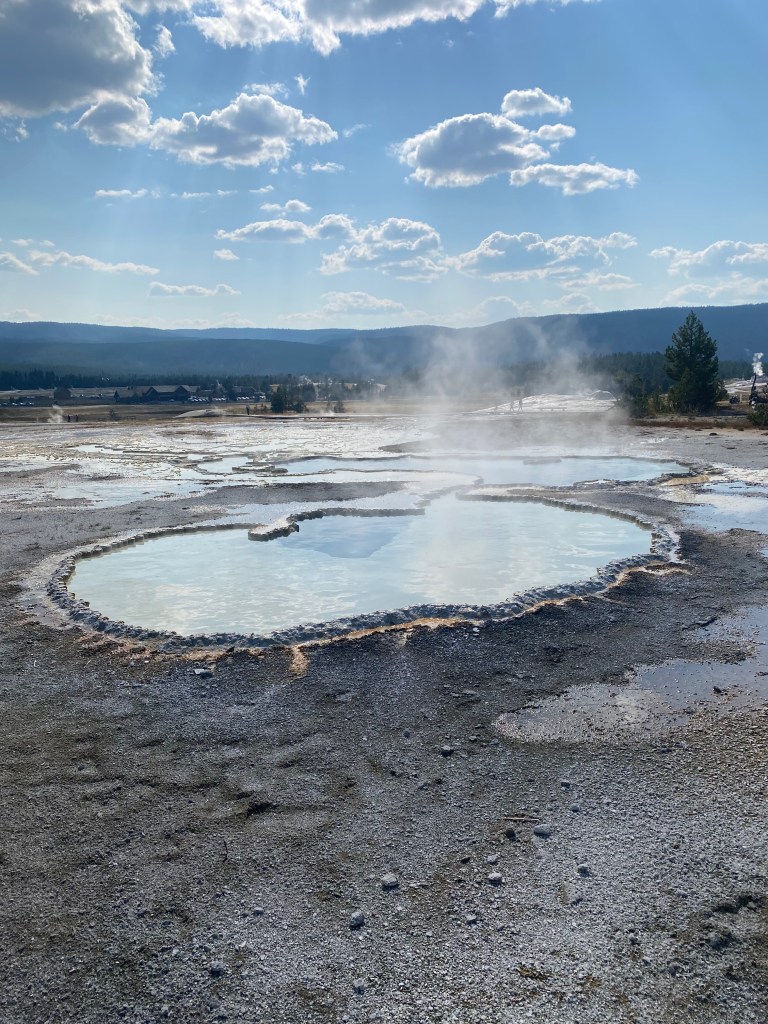
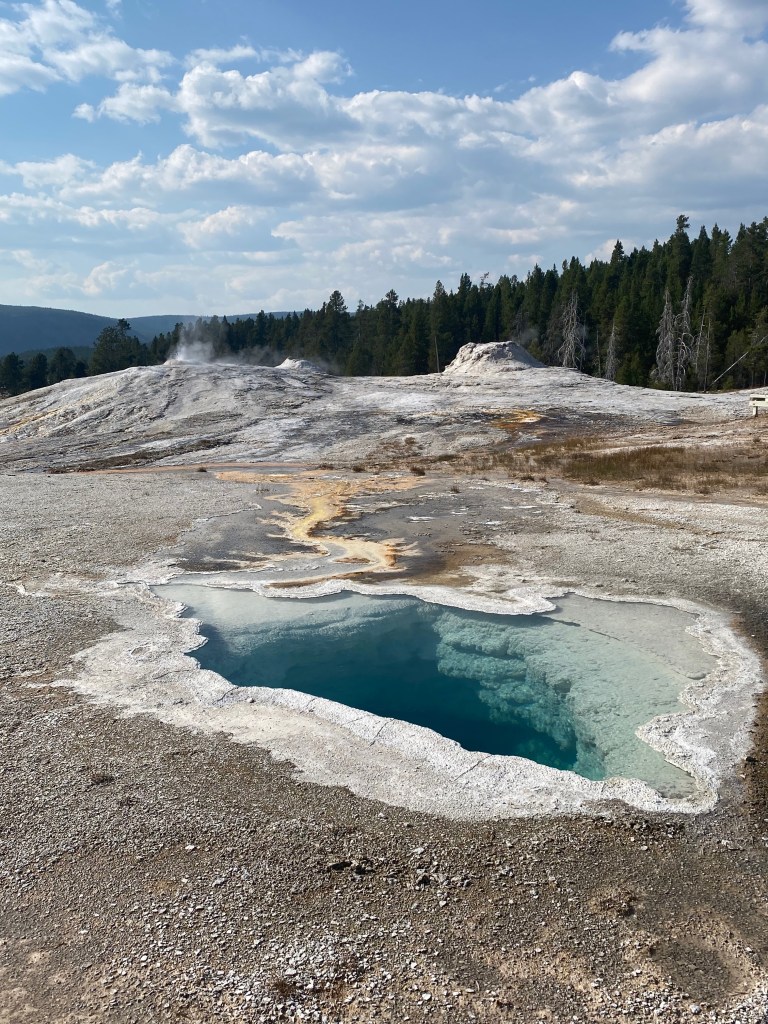
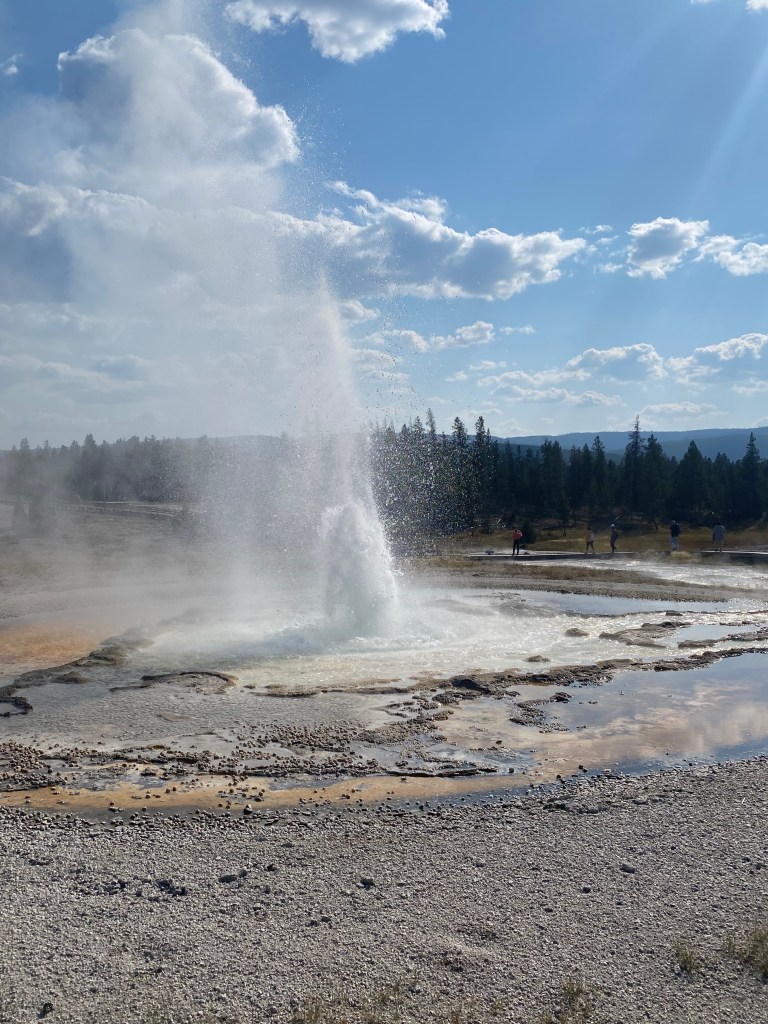
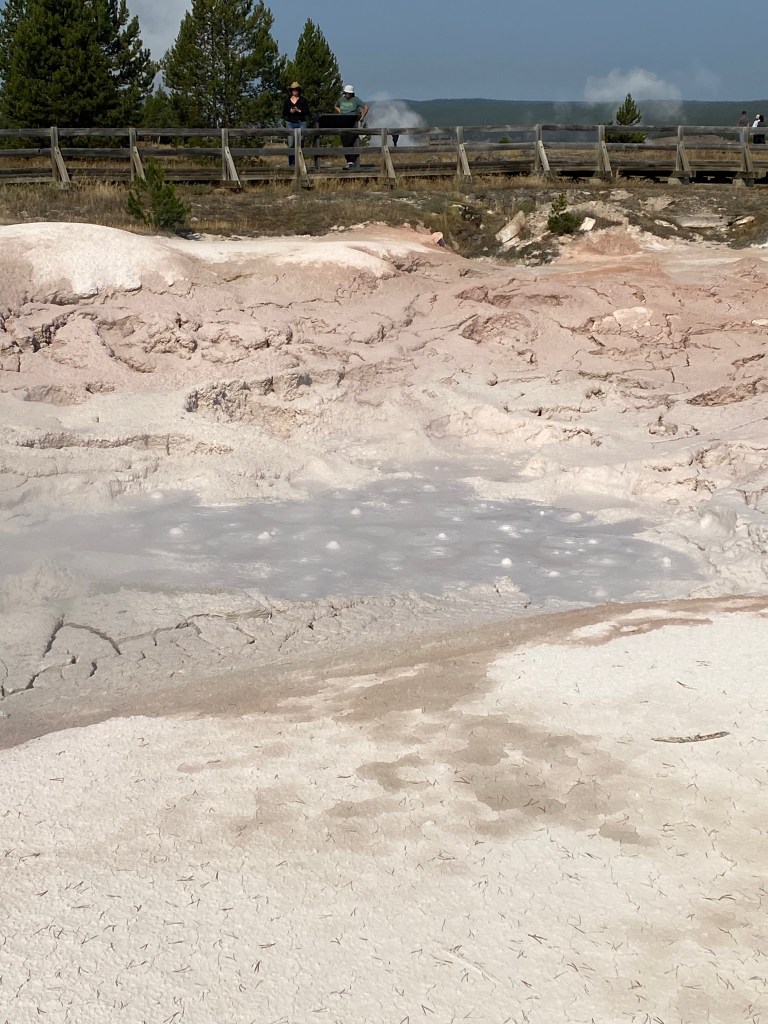
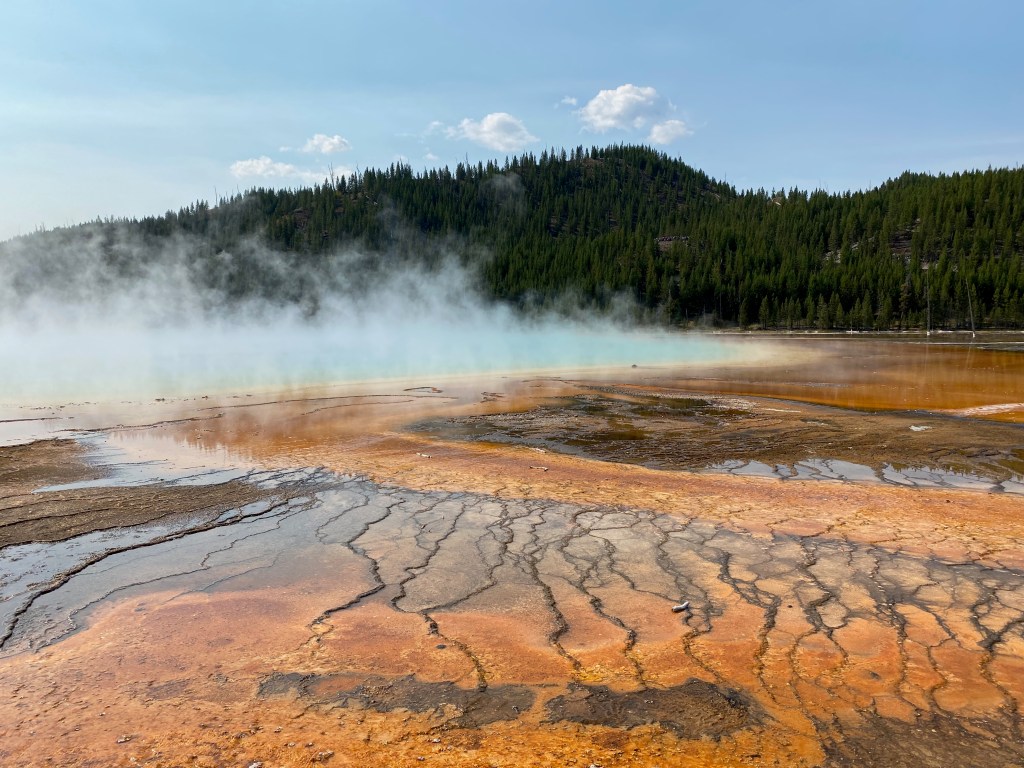
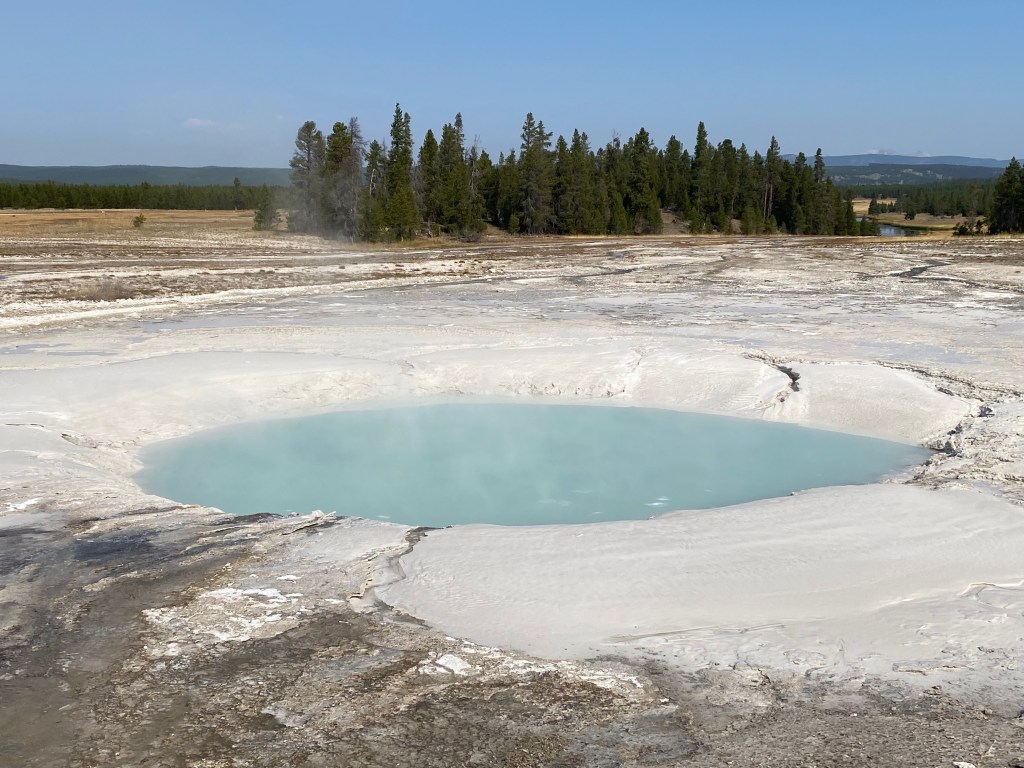
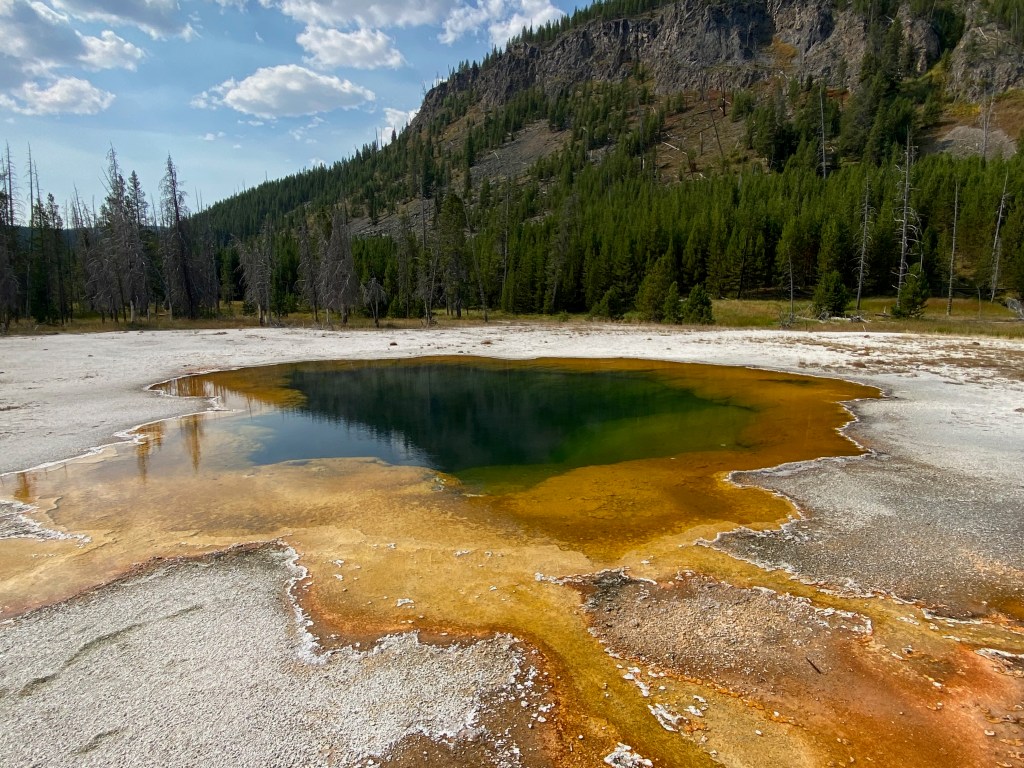
I spent most of my time in Yellowstone following the boardwalks that plot a safe route through the various geyser areas, intent on seeing every geothermal element I could access. Erupting geysers are fun, like the earth’s own version of a fountain show, and bubbling mudpots made me think of a witch’s sludgy cauldron. I lingered longest and took the most photographs, though, at the spectacular hot springs: steaming pools, their depths tinted vivid shades of blue, green, and orange by the presence of microorganisms that thrive in the water’s 200-degree (Fahrenheit) temperature. Deadly to humans (the stories of people who have fallen into Yellowstone’s hot springs are stomach-turning), but uniquely suited to sustaining a form of life invisible to the naked eye: the hot springs captivated and fascinated me.
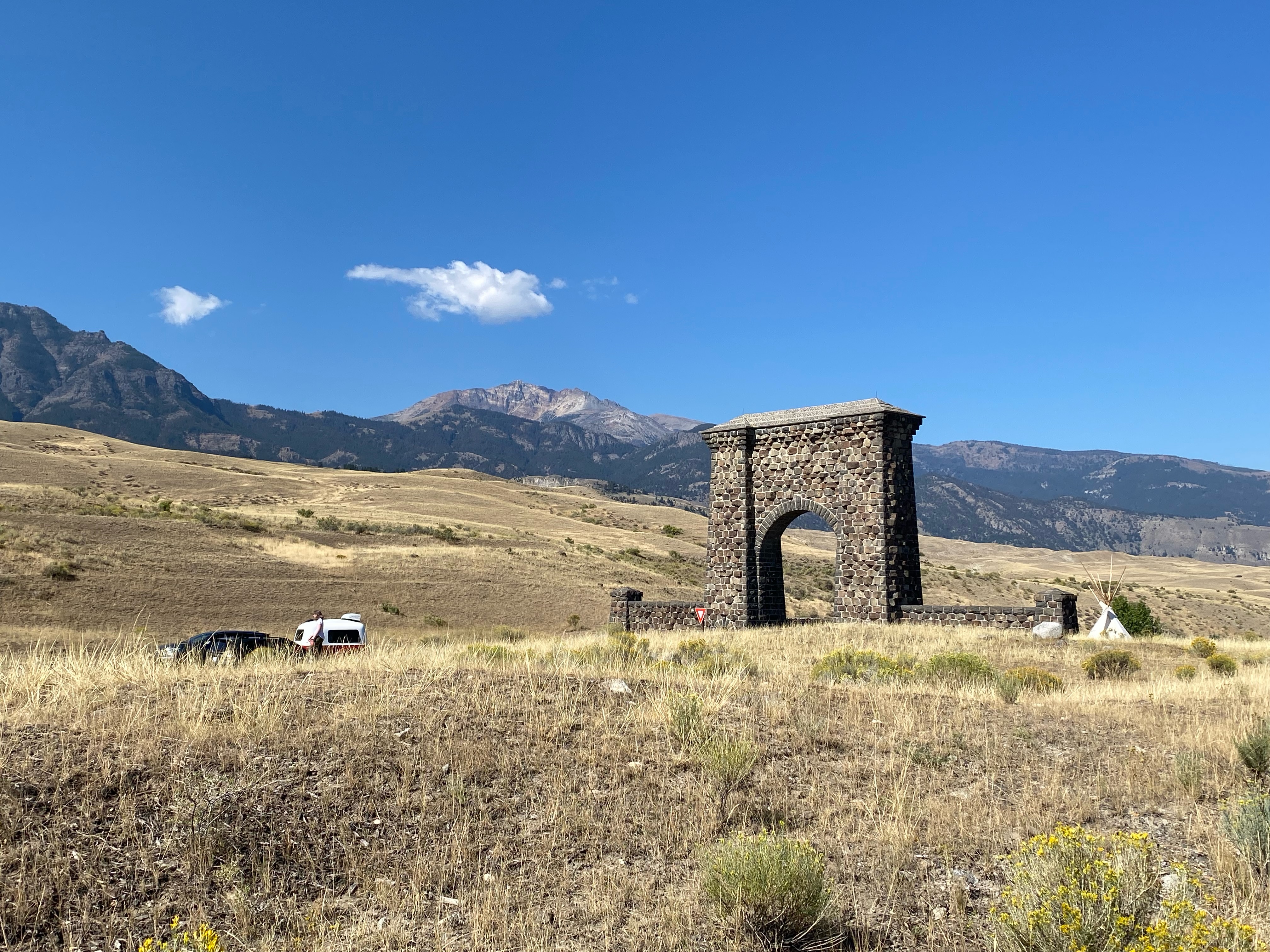
Old Faithful and its surrounding geyser basins sit along the southwestern curve of Yellowstone’s figure-eight Grand Loop Road. I followed the northwestern section of the road to reach the town of Gardiner, the historic 19th-century entrance to Yellowstone National Park. Here, a stone arch rises out of the landscape, unconnected to anything around it—the Roosevelt Arch, dedicated by Theodore and engraved with his vision for America’s National Parks: “For the benefit and enjoyment of the people.”
Fifty miles north of Old Faithful, Gardiner and its closest Yellowstone attraction, Mammoth Hot Springs, are nestled amid very different terrain. Dense woods give way to dry, scrubby fields, surrounded by rocky mountains. The most uniquely beautiful element of this landscape, though, are the travertine terraces that ascend from the town of Mammoth.
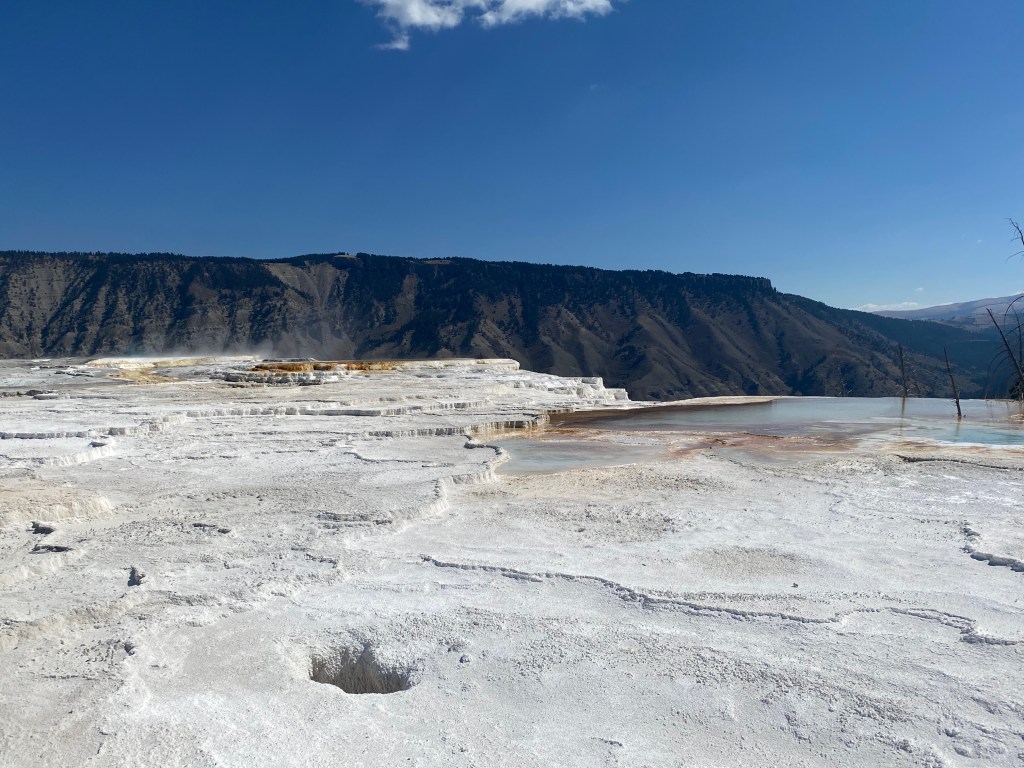
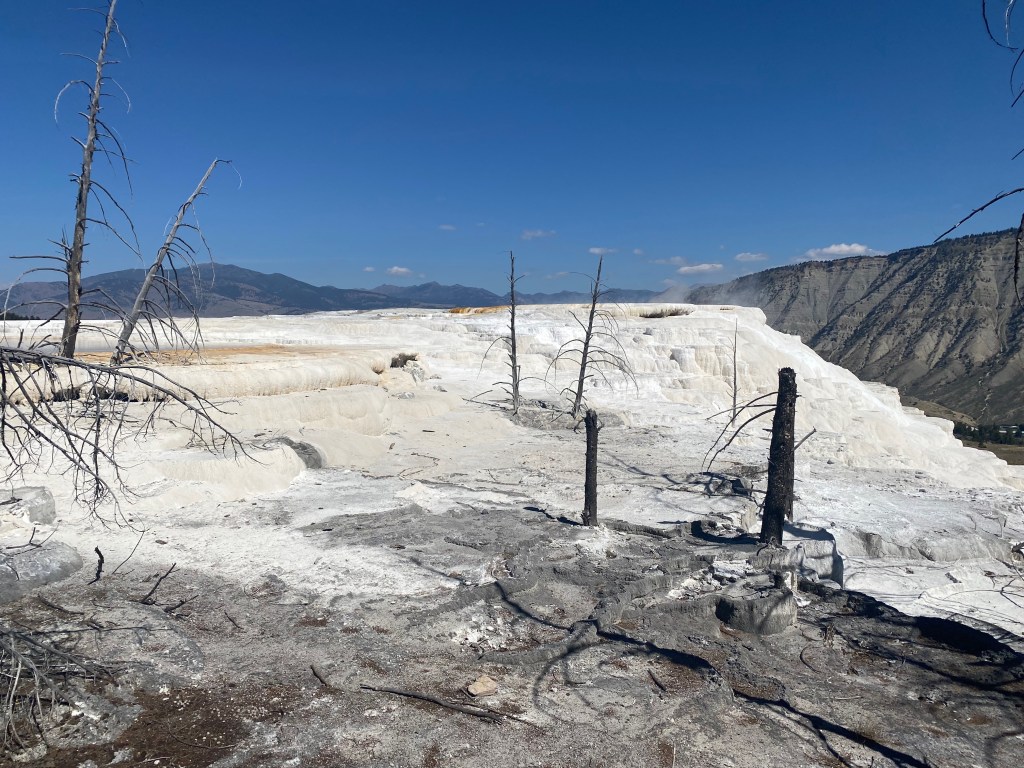
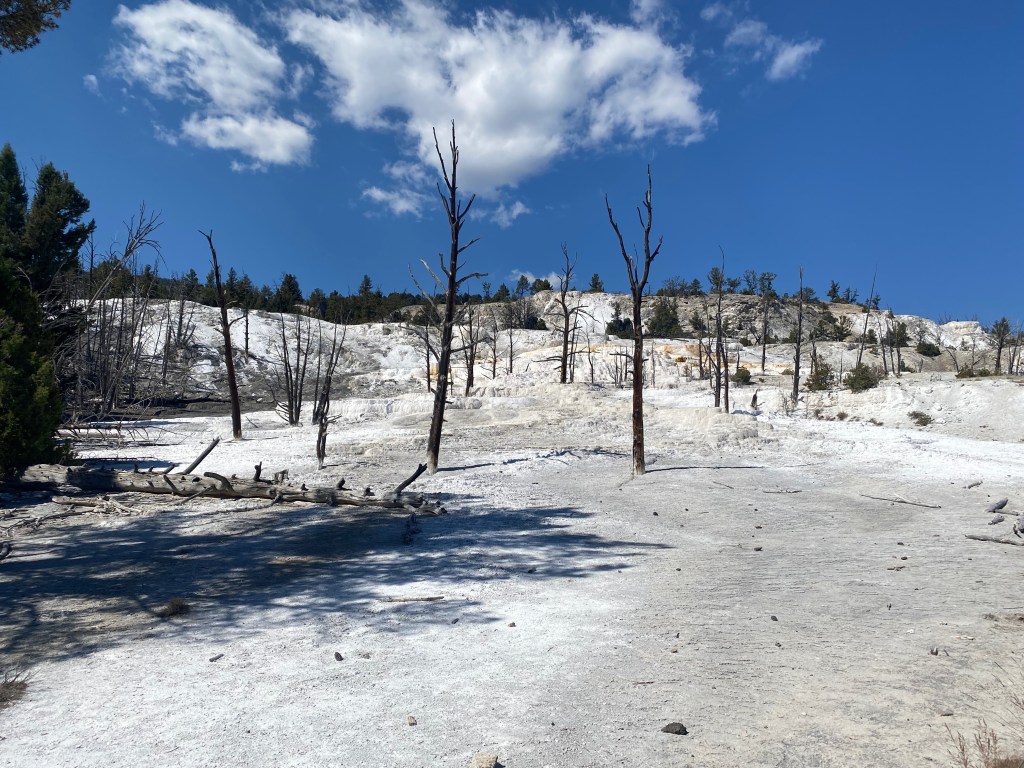
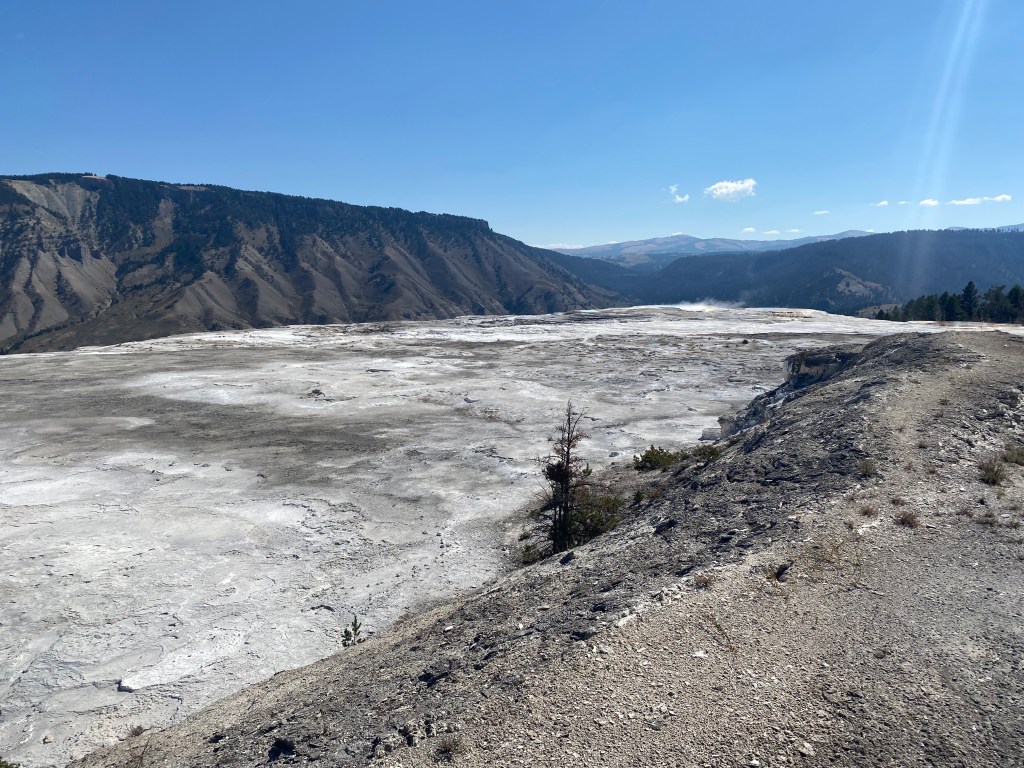
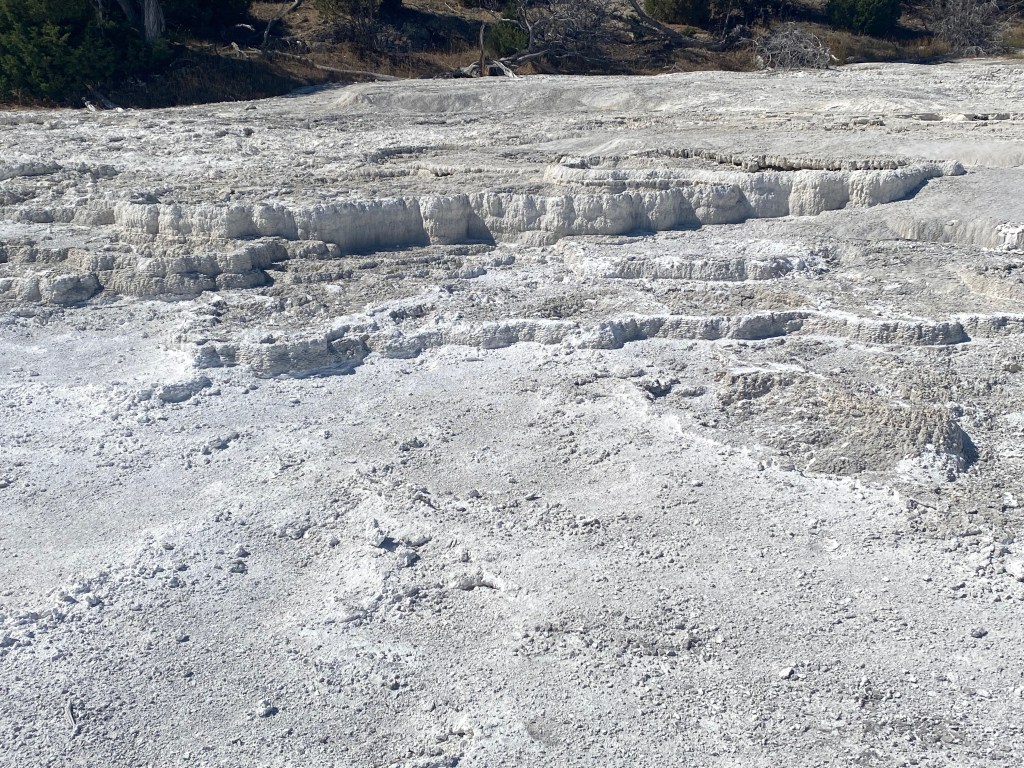
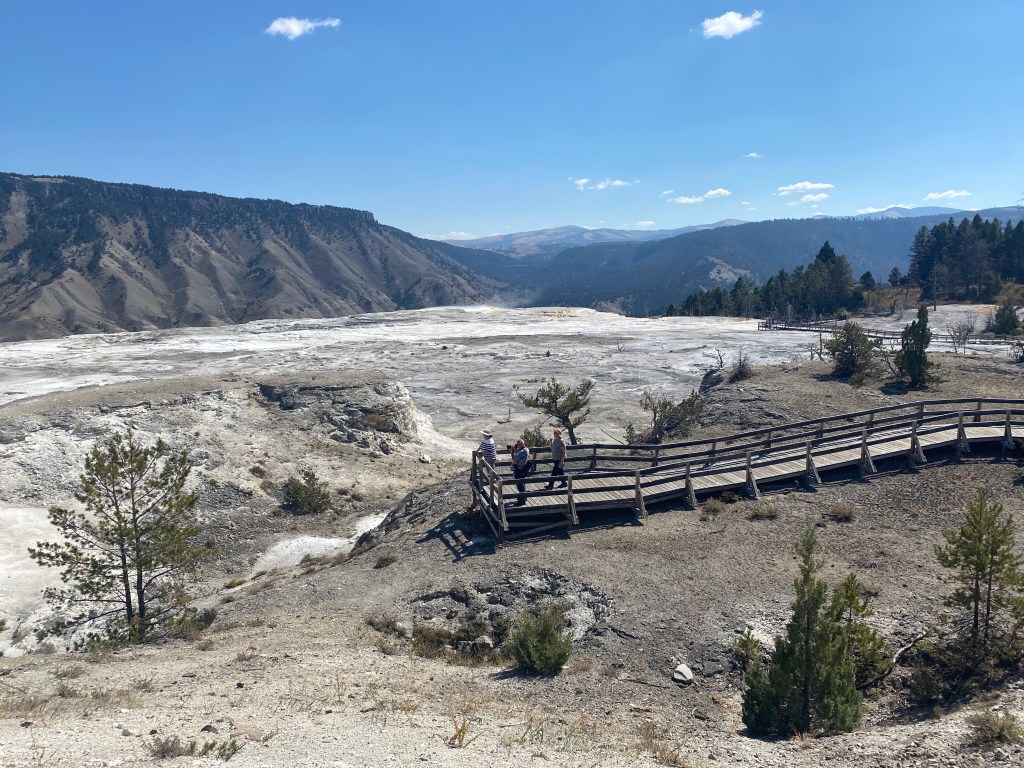
Chalky white, with occasional rust-colored streaks, the terraces seem like they’ve been transplanted from the surface of the moon. While there’s still some hydrothermal activity on the surface in the Mammoth area, on the whole it’s much drier than geyser basins to the south. It’s equally spectacular, albeit in a whole different way, reinforcing the good fortune that Yellowstone visitors have to see so many varied examples of geothermal activity clustered in one place. Benefit and enjoyment, indeed.
Prior to my trip, I had borrowed several guidebooks from the library and scoured tips for Yellowstone planning online. I thought that three and a half days in the park would afford me plenty of time to complete my itinerary. By the end of day two, however, I admitted to myself that there was no way I’d get to see everything I’d planned: in addition to delays caused by crowds and slow traffic, I was spending much more time at each stop than I’d anticipated, plus making plenty of unscheduled ones whenever something interesting by the side of the road caught my eye.
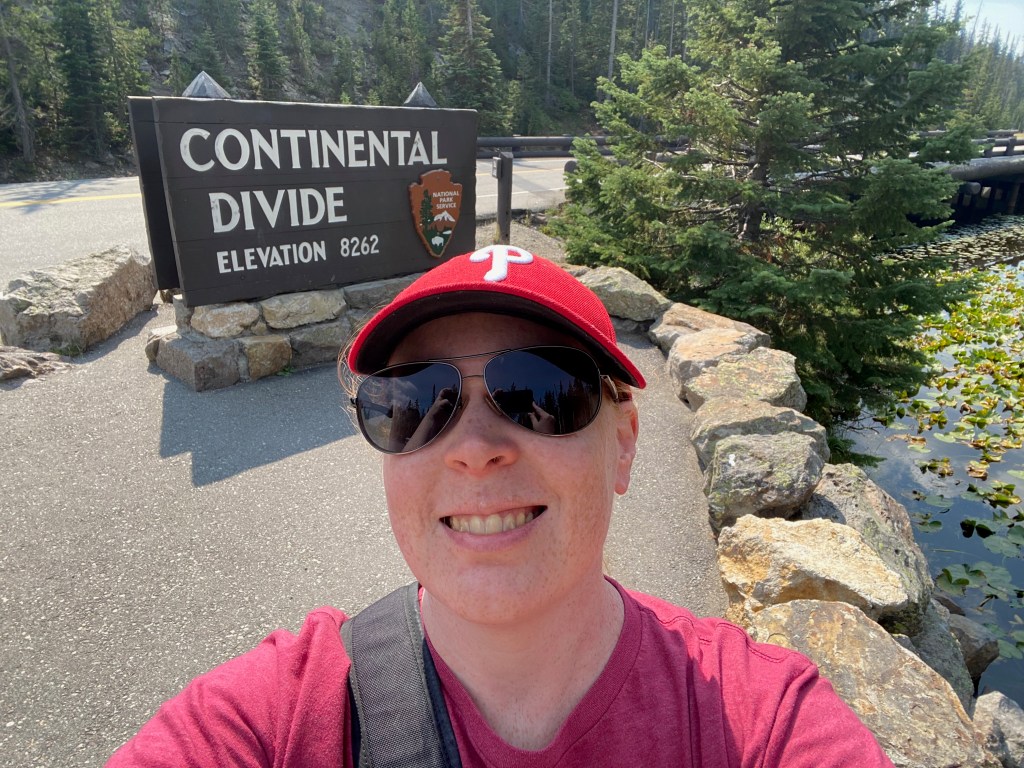
So I decided to forgo the eastern side of the park—just driving there and back would have taken at least an hour and a half each way—and double down on enjoying the western side in the time I had left. I returned to some of the geyser areas I had initially skipped due to crowds, circling parking lots until a space eventually opened up. Without the worry that I needed to keep moving, I slowed down even further, sometimes walking a section of the park twice to ensure that I’d seen everything. I drove down to the Continental Divide—kind of anticlimactic, as the only indication of it is a big sign that says “CONTINENTAL DIVIDE,” but I’ve never passed up a cheesy photo op before and wasn’t about to start then.
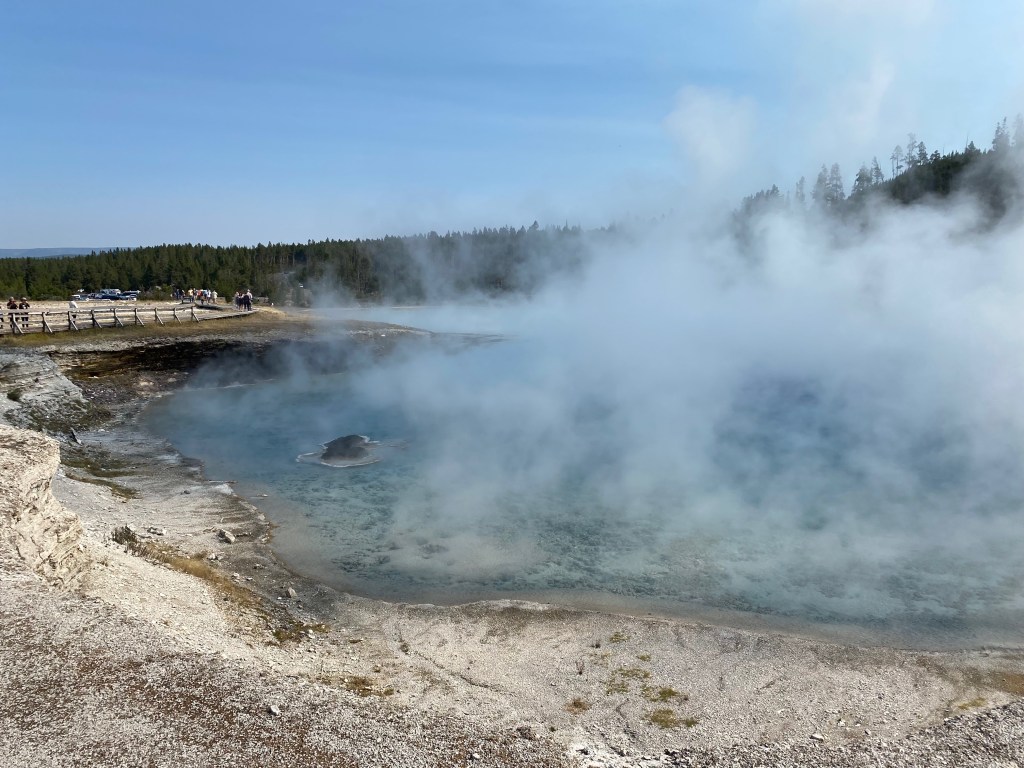
So, I still have a lot of Yellowstone to see and plan to go back—sometime. I spotted elk and bison, but no bears, and didn’t do any hiking of significance. I’d love to dedicate a week-long vacation just to the park (plus visit Grand Teton National Park, a short drive south, after that), armed with the knowledge that it’s best to start early in the day and under-plan rather than try to pack in every park attraction over a long weekend.
“Nothing remarkable has occurred,” Ferdinand Hayden remarked during his 1872 survey of Yellowstone, “while everything may be said to be remarkable.”* After I read that quotation in Saving Yellowstone, it popped back into my head almost daily. Nothing “happened” during my trip: I spent a lot of time driving, I walked around, I took hundreds of photographs. Yet every moment of it was indeed remarkable, because I’ve never seen anything else on earth like the wonders at Yellowstone.
A Few Notes on Logistics
I was at Yellowstone during the week after Labor Day, when kids are back in school and the peak of summer visitors has passed. It was still crowded. Many of the parking lots are surprisingly small and fill quickly. If/when I go back, I’ll probably aim to go later in September.
I stayed at a motel in West Yellowstone, a honky-tonk gateway town that’s convenient but pretty charmless. I liked Gardiner, the town outside the park’s north entrance, much more—smaller, quieter, and more historic.
Everything I read ahead of my trip warned that the food options inside the park are limited, expensive, and not very good. Nothing I saw changed my mind; the only consumable I bought was ice cream (still expensive, but at least it was good). Prior to leaving Michigan, I had prepared my “snack sack”—a small suitcase filled with vacuum-packed tuna pouches, protein bars, peanut butter and crackers, fruit snacks, olives, nuts, and more—and every morning I packed a lunch to go, adding a banana from the hotel breakfast buffet. While it wasn’t the most interesting diet, it was fine. There are convenient water bottle filling stations at visitor centers throughout the park.
I didn’t find dining options in West Yellowstone to be much more impressive than those inside the park. All the meals I ate there were fine; almost nothing was great or warranted a return trip. The only place I’d recommend is Bear Country Bakery, which serves very good coffee and large pastries. I didn’t look into AirBnB or vacation rental options when trip planning, but having a kitchen to cook in would have been better than relying on restaurants. Again, something I would do differently on a return visit.
*Quoted in Megan Kate Nelson, Saving Yellowstone: Exploration and Preservation in Reconstruction America, p. 59.
Featured photo: Grand Prismatic Spring, Yellowstone National Park, September 7, 2024.
 Maura Elizabeth Cunningham
Leave a comment