
The final train departed Detroit’s Michigan Central Station on January 5, 1988. The Beaux Arts building had been an architectural marvel when it opened 75 years prior—designed by the same firms that had collaborated on Grand Central Terminal and, at 18 stories, the tallest train station in the world at the time. At its peak in the 1940s, the depot saw 200 trains and 4,000 passengers pass through daily. By 1988, however, that peak was barely a memory. A post-World War II decline in passenger rail service caused a resulting decline in upkeep of the station: its restaurant and shops closed, passengers had access to only a small section of the main waiting room, and daily train traffic fell into the single digits. Maintaining 500,000 square feet of station and office space was impossible.

I became vaguely aware of the station after I moved to Michigan in 2016, hearing that it was sometimes possible to go in for a tour of the structure, its interior covered in graffiti and its decaying architectural grandeur an attraction for those drawn to urban ruins. But with other places to see and things to do in my new home, I didn’t make any effort to visit the decrepit station.
Michigan Central Station (MCS) is anything but decrepit now: purchased by Ford in 2018, the building underwent an exhaustive restoration before opening to the public on a limited basis this summer. I went yesterday, standing in line with hundreds of other people for nearly an hour before we were admitted to the station’s soaring halls. Even having viewed before-and-after photographs online, in person I was stunned by the detail and the quality of the rehabilitation work. “The world saw decay,” an introductory video in what was once the Women’s Waiting Room declared. “We saw opportunity for renewal.”
Others before Ford had seen opportunity for renewal, too; city and business leaders had discussed the question of what to do with MCS throughout the 1990s and 2000s. (Although at one point Detroit City Council ordered the station demolished outright, its presence on the National Register of Historic Places prevented that from happening.) One developer sought to make it a casino, nightclub, and hotel; former Mayor Kwame Kilpatrick proposed that it become the city’s police headquarters. The size and condition of the building, however, meant that only an owner with considerable money to spend would be able to bring it back into a usable state.
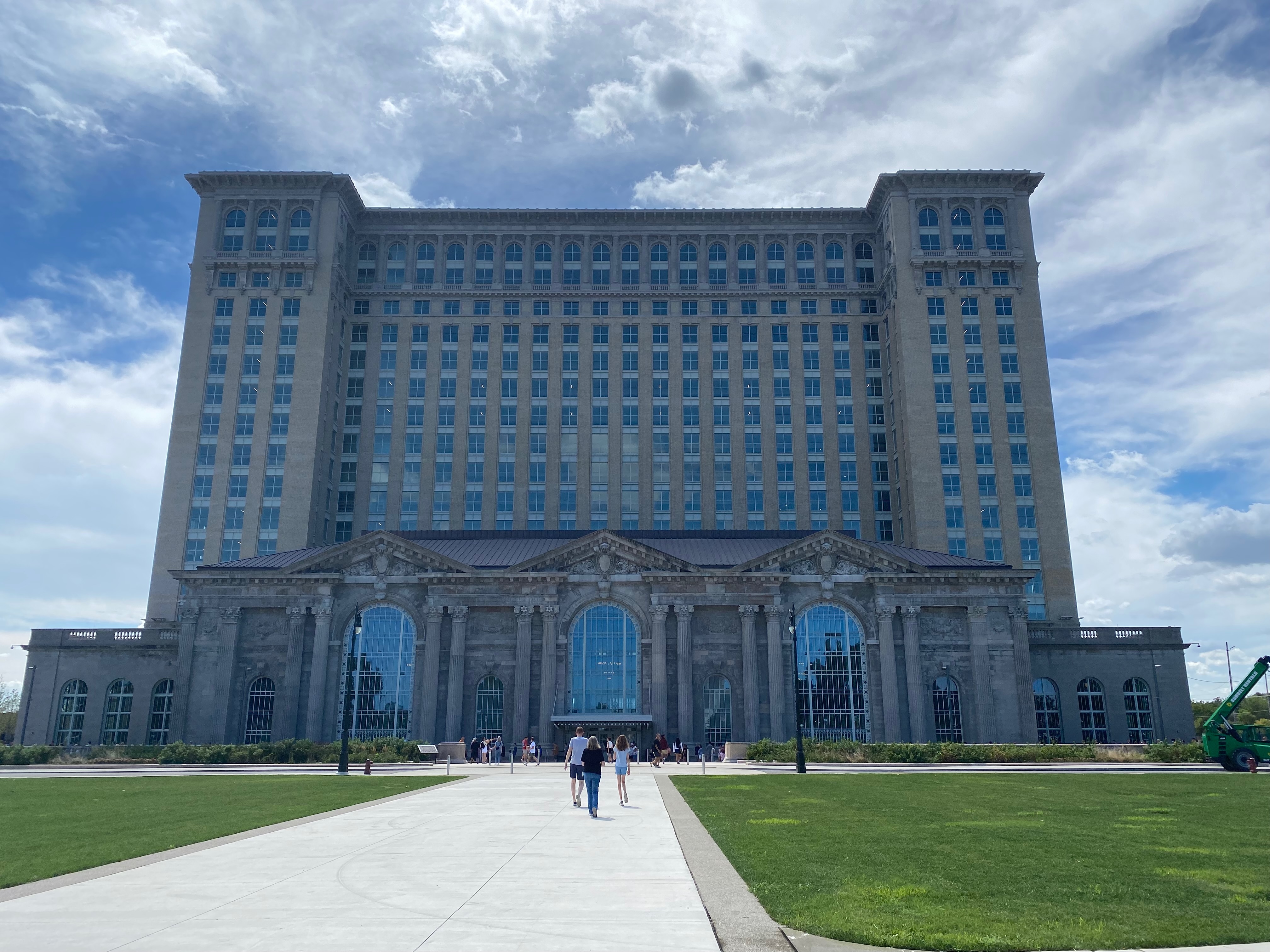
Enter Ford.
The Ford Motor Company (and family) grew rich by manufacturing the cars that diverted people away from train travel and made MCS obsolete; now, the corporation is devoting $950 million of its wealth to developing MCS and the Corktown neighborhood around it into a technology campus. The restored station is beautiful, and a worthy endeavor, but it’s anything but selfless. Ford received $300 million in various tax incentives for the project, and the campus will bring in revenue via the leasing of space for retail, dining, hospitality, and offices. And while the exhibits now installed on the main floor of the station are interesting, they are also quite heavy on the promotion of Ford and Ford history—not surprising, perhaps, but not exactly what I expected in a historic railroad station.
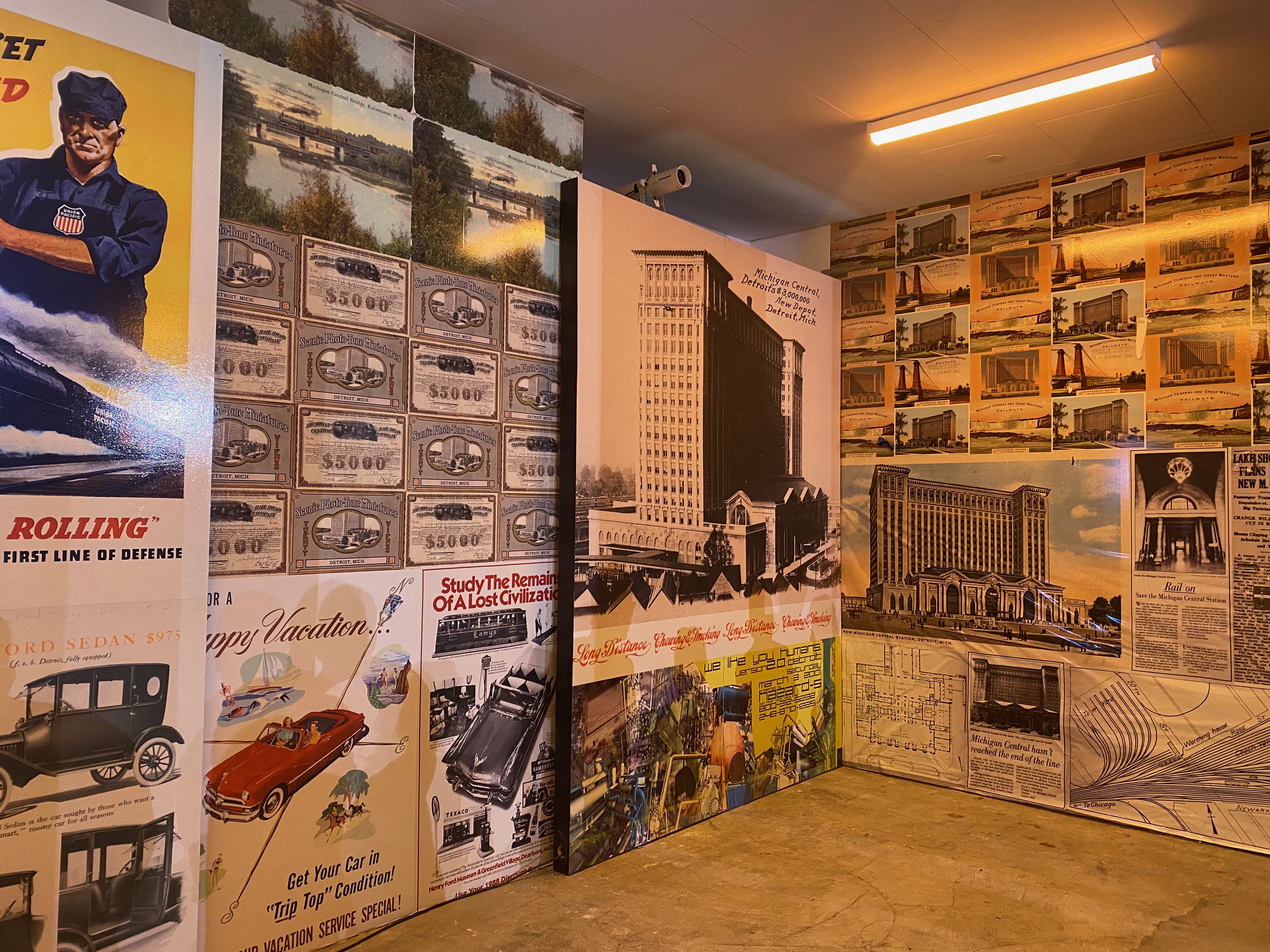
The Grand Hall introduces the history of MCS and Detroit (and Ford), while the former ticket office is now the “Poster Vault,” its walls plastered with historic promotional materials for the railroads and Detroit cultural events (and Ford). What was once the reading room contains “Faces of Michigan Central,” a collection of oral histories featuring memories of people who once worked at the station or who have significant family stories involving MCS (including Bill Ford). Other interviewees worked on the restoration or participate in one of the technology programs already housed in the campus’s offices.
Leaving that exhibit leads into the “Open Archive,” the old station restaurant now filled with objects related to MCS history and the restoration. This was the one space that I wish had been designed differently, as even at half the visitor capacity of yesterday’s I think it would feel cramped. I wanted to linger and really take in the exhibits, but the press of people around me made careful scrutiny impossible. (At the station exit, I asked a guard who was counting visitors how many people were coming through per eight-hour day; between six and eight thousand, he said.) The section detailing the restoration emphasized the care and diligence of the more than three thousand artisans who worked on the project, many of them employing a blend of technology, such as 3-D scanning and printing, and old-school methods to ensure that they were getting things right down to the smallest detail. As a worker interviewed in the oral history exhibit said, the once rundown station is now “glowing.”
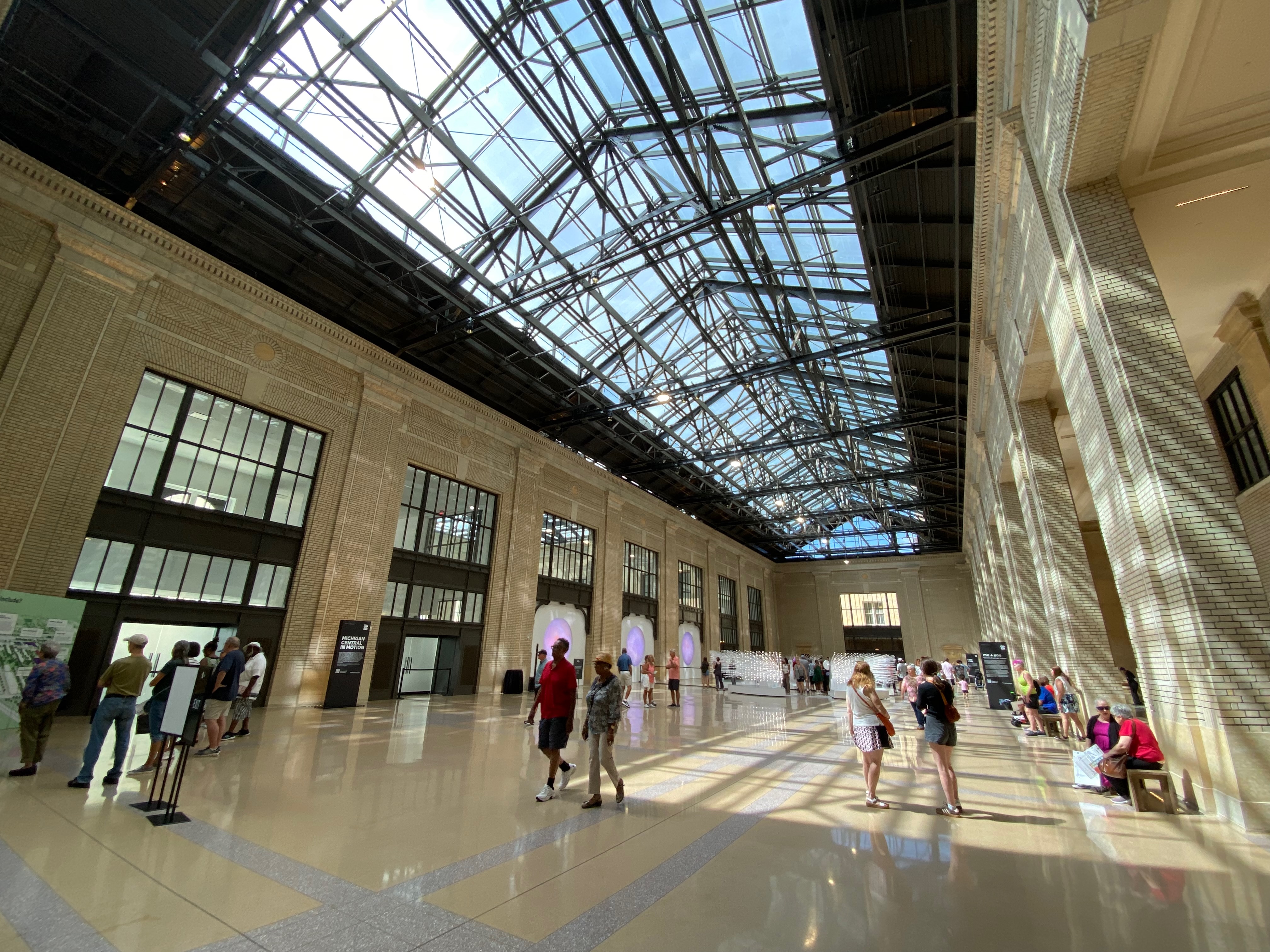
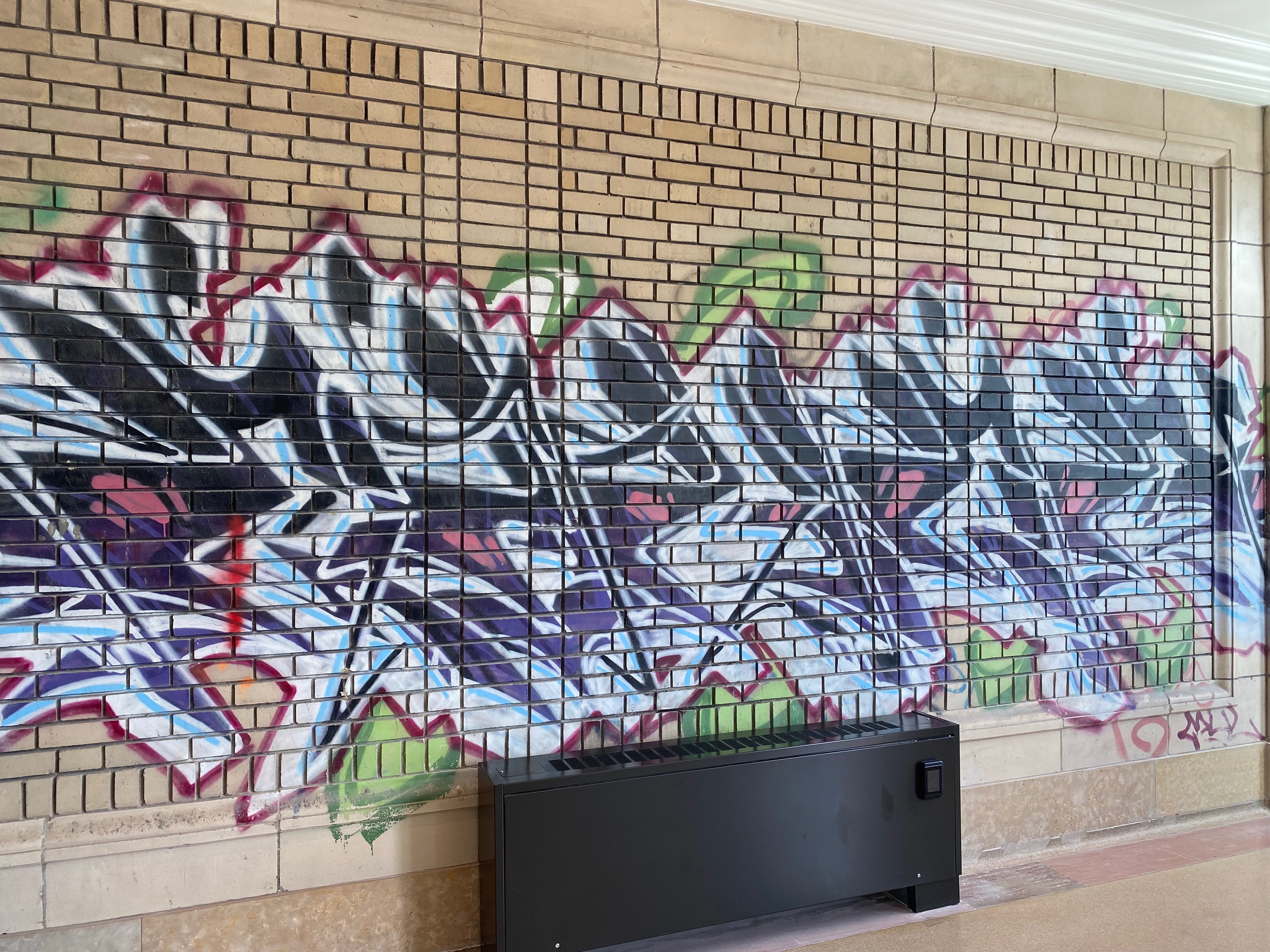
The final major space is the South Concourse, whose spectacular skylight had to be completely replaced. Beneath the glass ceiling is me + you, “an interactive open source AI artwork” that had such a crowd within it that I just walked around the perimeter. I exited the station through a short hallway, its walls lined with “the last graffiti at Michigan Central,” as a placard announces. To capture the station’s full history—both the aura of its heyday and the years of its abandonment—the restoration team decided to maintain some of the graffiti that once covered the entire space.
Walking out of MCS, I felt conflicted. I love historic buildings, and it’s wonderful to see this one restored with such attention to detail. The project obviously wouldn’t have happened if Ford hadn’t stepped up to lead, and fund, it. But the station, even filled with visitors, feels somehow hollow, its restoration a corporate move disguised as a good deed.
No reading recommendations from me this week, as the late-summer heat and time off from work have lulled me into a lot of puttering around rather than keeping up with anything more than headlines. I will, however, recommend a few seasonally appropriate dishes that I’ve been enjoying: black bean burgers (the recipe is in the America’s Test Kitchen archive, if you have an account; I got it from the Vegan for Everybody cookbook), 5-bean salad (so easy, and the perfect hot-weather dinner), and Charred Corn Quinoa Salad with Avocado & BBQ Tahini Ranch Dressing (the best, BEST summer salad I’ve ever made, with a dressing that I could put on everything).
I’ve also been watching a six-episode Ken Burns documentary on the National Parks, “America’s Best Idea,” both to prepare for my trip to Yellowstone this week and also because I’m a history nerd who loves documentaries. This is a good one.
Thanks for reading.
Featured photo: The Grand Hall in Michigan Central Station, August 31, 2024.
 Maura Elizabeth Cunningham
Leave a comment