Recommendations
China Stories
Jude Blanchette, “China Is in Denial About the War in Ukraine”
Keith Bradsher, “How China Built Tech Prowess: Chemistry Classes and Research Labs”
Tang spent eight years in Taiwan’s government (the last two as the world’s first minister of digital affairs), putting her theory into practice – and it has worked, from a fantastically efficient response to Covid to countering misinformation about electoral fraud. All of it has been achieved online with the support of citizens eager to share information and ideas. Now the rest of the world is beginning to listen to Audrey Tang.
— Simon Hattenstone, “The good hacker: can Taiwanese activist turned politician Audrey Tang detoxify the internet?”
Amy Hawkins, “‘Always remember’: how Tim Walz’s time in China shaped him”
Amy Hawkins, “Custody ruling in same-sex case hailed as LGBTQ+ milestone in China”
Nicole Hong and Michael Rothfeld, “Behind the Pageantry of Shen Yun, Untreated Injuries and Emotional Abuse”
Ingleson’s and Chatwin’s research underscores that Chinese labor and the process of economic liberalization were not always connected to economic exploitation and political suppression, but their research also shows how the system in which we all now live and consume was finished like piecework, patched together to sustain systems of power and control in both the United States and China.
— Kate Merkel-Hess, “Chinese Production, American Consumption”
Paul Musgrave, “Tim Walz Has Always Been Consistent on China”
Amy Qin, “In the Race for San Francisco Mayor, Chinese Voters Take Center Stage”
Vivian Wang, “China’s Extreme Fan Culture Makes Olympic Gold a Mixed Blessing”
Wanderings Around the World
Subho Basu, interviewed by Isaac Chotiner, “The Historical Forces Behind the Student Rebellion in Bangladesh”
Roxane Gay, “The Harris-Walz Ticket Is Our Opportunity for Political Imagination”
Charlotte Higgins, “‘Casual decommunisation’: seeking to save Ukraine’s Soviet-era modernist masterpieces”
Ana Ionova, with photographs and video by María Magdalena Arréllaga, “37 Square Feet That Show Brazil’s Racist Past”
Photographs by Diana Markosian, with text by Jennifer Homans, “The Ghosts of the Cuban National Ballet”
Mujib Mashal and Saif Hasnat, with photographs by Atul Loke, “Where Students Run the Streets: Bangladesh in Limbo”
This campaign has only three months to run a successful — and historic — campaign. So far, they are campaigning as though the nation’s limited imagination about what power looks like could be malleable. Against so many expectations, Harris looks and sounds like a president even though no other president has ever looked like her. That in itself takes a remarkably nuanced appreciation for how race, gender, class, power, leadership, perception and politics actually work. Not how they work in theory. Not how they worked 50 years ago. How they work today.
— Tressie McMillan Cottom, “How Kamala Harris Is Already Changing the Face of Presidential Power”
Siobhán O’Grady, Kostiantyn Khudov, and Serhiy Morgunov, “The rescue worker and the opera star: Love and fear in wartime Ukraine”
Anne Helen Petersen, “Bama Confidential” series — everything you didn’t know you need to know about Greek Life at the University of Alabama and its peers
Bryan Pietsch, “Why Indonesia moved its capital to a jungle hundreds of miles away”
Mezna Qato, “Without our libraries and universities, how will we tell the story of Gaza?”
Rebecca Tan, “As Vietnam tightens leash on criticism, scores are jailed and exiled”
Alan Taylor, “The Building of Nusantara” — photo essay of the construction in Indonesia’s new capital city
At some point, Yashin became aware that he was being prepared for a prisoner exchange. If he were traded, he would gain his freedom, but he would be forced to live abroad. “Russia is my home,” Yashin told me. “The mere thought that someone would kick me out of my home is outrageous. Why does Putin get to decide if I live here or not? It’s just as much my country as his.”
— Joshua Yaffa, “The Russian Prisoner Who Didn’t Want to be Freed”
Standout Story
I have two special pieces of audio reporting to recommend this week, both dealing with “celebrity dissidents” who have left China.
First, NPR journalist Frank Langfitt thought he was embarking on a story about overseas dissidents who were victims of swatting (reports of false crimes that result in very real police activity). In speaking with critic-in-exile Gao Zhi, however, Langfitt came to realize that he had stumbled on a case that was far more complicated, and far stranger, than anything he could have dreamed up.
Frank Langfitt, “Is a high-profile critic of the Chinese Communist Party a con man?”
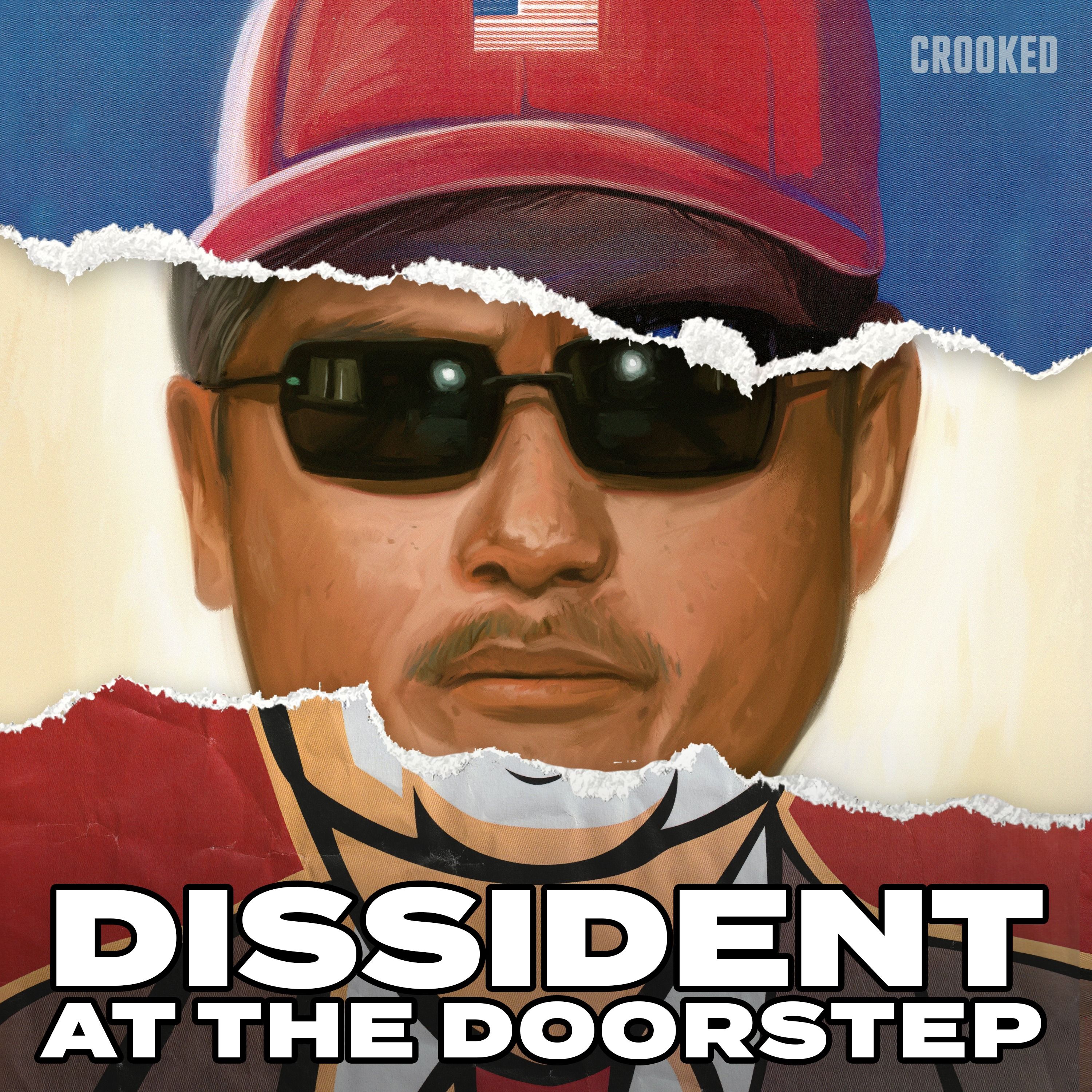
“After you arrive in America as a hero, what happens to you next?” This is the question that propels “Dissident at the Doorstep,” an eight-episode podcast series from Crooked Media, reported by the trio of Alison Klayman, Colin Jones, and Yangyang Cheng. The series focuses on blind activist Chen Guangcheng, who was imprisoned in China for his work on human rights and the rule of law before he managed to escape in 2012 and secure refuge in the United States. Over time, however, Chen drew away from those who had supported him on his arrival in America and joined up with ultra-conservative groups—even giving a speech at the 2020 Republican National Convention. Klayman, Jones, and Cheng try to figure out how that happened.
Alison Klayman, Colin Jones, and Yangyang Cheng, “Dissident at the Doorstep”
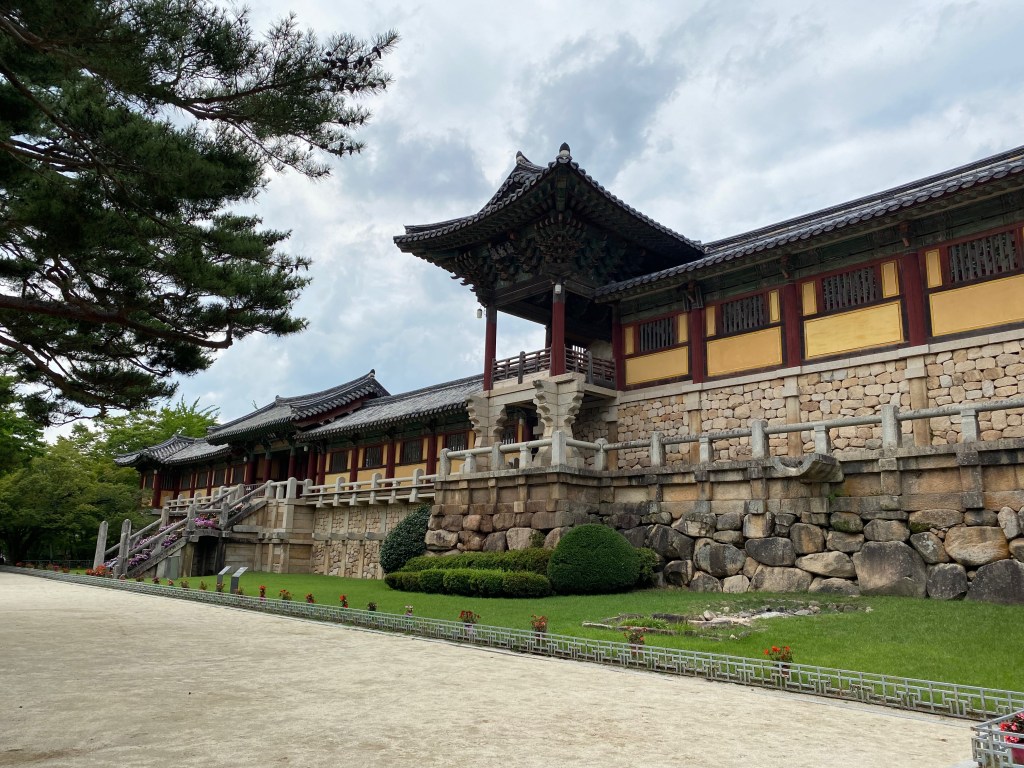
Featured photo: Bulguksa Temple, Gyeongju, South Korea, June 27, 2023.
 Maura Elizabeth Cunningham
Leave a comment