
No note from me up top this week because (a) What a wild weekend we’ve just had in the United States, and (b) I flew back from Indonesia on Friday-Saturday so my brain is nothing but mush at the moment.
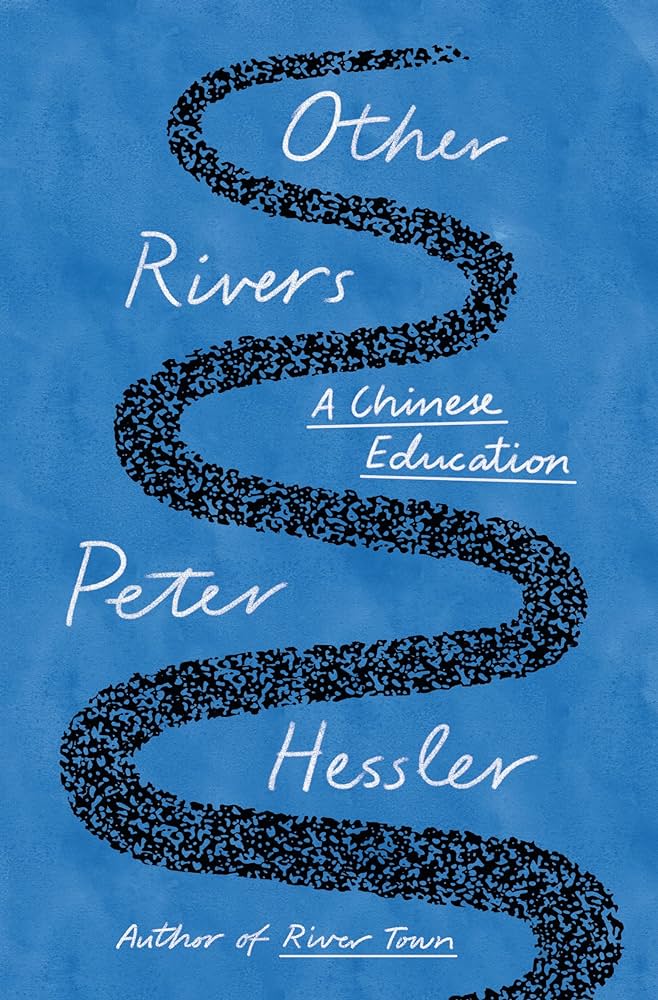

I do have a new piece of writing to share. The Wall Street Journal has published my joint review of two new China books, Other Rivers: A Chinese Education, by Peter Hessler, and Private Revolutions: Four Women Face China’s New Social Order, by Yuan Yang. The books cover a range of topics—economics, gender, society, history, urbanization, and so much more—and since I had only 1,300 words to work with in my review, I focused on what they have to say about education in China. Both are by longtime journalists, who write in a fluid, often conversational style that makes the pages fly by. Great summer reading, if you’re in the mood for some nonfiction.
Recommendations
China Stories
Jordyn Haime, “MAGA Communism and the China Grift”
Lyric Li, “U.S.-China rivalry enters a new sphere: Who can best carry a tune”
Xia’s brief dissident life in China was a lonely one. Police told her not to discuss her detention experience on social media. There was no organized activist community or guidance on how to protest. In diaspora, she is connected with dissidents across continents. From those older and more experienced, she has learned about the past decade of activism in China. Sometimes they just talk about life in their new homes.
— Shen Lu, “A Young Chinese Dissident Finds a Less Lonely Life in Exile”
Simone McCarthy, “Trump’s ‘luck’ and American ‘violence’ are the talk of China’s internet”
Dalia Parete, Introductory issue of “Intersections,” a new Lingua Sinica monthly bulletin “dedicated to coverage of women’s issues and feminism in the Chinese-language media space.”
Zia ur-Rehman and Christina Goldbaum, “As Violence Surges, Can Pakistan Protect Its Chinese Projects?”
Ye Zhanhang, “Chinese University Launches ‘Panda Studies’ Program”
Wanderings Around the World
Avery Blankenship, “Mastering the Art of Reading an Old Recipe”
Kate Carpenter, “How the Original Twister Changed Storm Chasing Forever”
Sopan Deb, with photographs by Hiroko Masuike, “Keeping the Lights on at the Met Museum Is an Art in Itself”
Matthew Longo, “The DMZ at 70”
Alex Perry, “They Thought They Knew Their Hamsters. Then They Put Up Spy Cameras.”
Jason Rezaian, “This Palestinian bakery is an ode to family and roots”
Standout Story
During my year and a half with the Auburn University program, I started to think of education as a kind of smuggling, too. Though I was ostensibly there as an administrative assistant and to teach a general interest course about China, the educational exchanges that occurred went far beyond this scope. My experiences convinced me that prison education can act as an institutionally legitimate package through which educators can bring knowledge, intellectual resources, perspectives, and opportunities sorely needed in prisons. For self-reflective educators, prison education offers the chance to co-pilot radical, life-affirming learning journeys with some of the most motivated but disinherited people in the United States. Now is the time for educators to claim these people as students and reorient their vocation to align with the urgent goal of ending mass incarceration—the most brutal system our society currently wields to manage inequality.
—Luke Hein, “Teaching China in Alabama Prisons in Six Objects”
Featured photo: Taman Sari, the “Water Palace” of Yogyakarta, Indonesia, July 11, 2024.
 Maura Elizabeth Cunningham
Leave a comment