Happy Easter to everyone who celebrates, and happy final day of March to anyone else who feels like this month has been extra-long. March is always weird for me because the AAS conference falls somewhere in its latter half, so I spend the first couple weeks preparing for that, speed through five high-adrenaline days on site, then crash and limp my way through what’s left of the month. My crash this year hasn’t been as bad as in the past, and I feel like I’m mostly recovered already, but I’m not 100 percent.
Why, then, did I decide that it sounded like a good idea to attend a special screening of Oppenheimer at the Michigan Theater last Saturday night, not even 24 hours after I returned from Seattle? I’d heard it was a movie best seen on the big screen and I had missed its initial theater run. So I bought a ticket, not realizing that I could have watched it on the plane home and saved eight dollars, screen size be damned.
In retrospect, I realize the error of my ways: a three-hour-long film extolling the genius and complexity and complex genius of the man who led the world into the age of nuclear weapons was never going to be the movie for me—and certainly not when I could barely keep my eyes open through the final interminable hour. I was running late and the concession stand line was long, too, so I didn’t even get popcorn. An evening full of poor choices on my part.
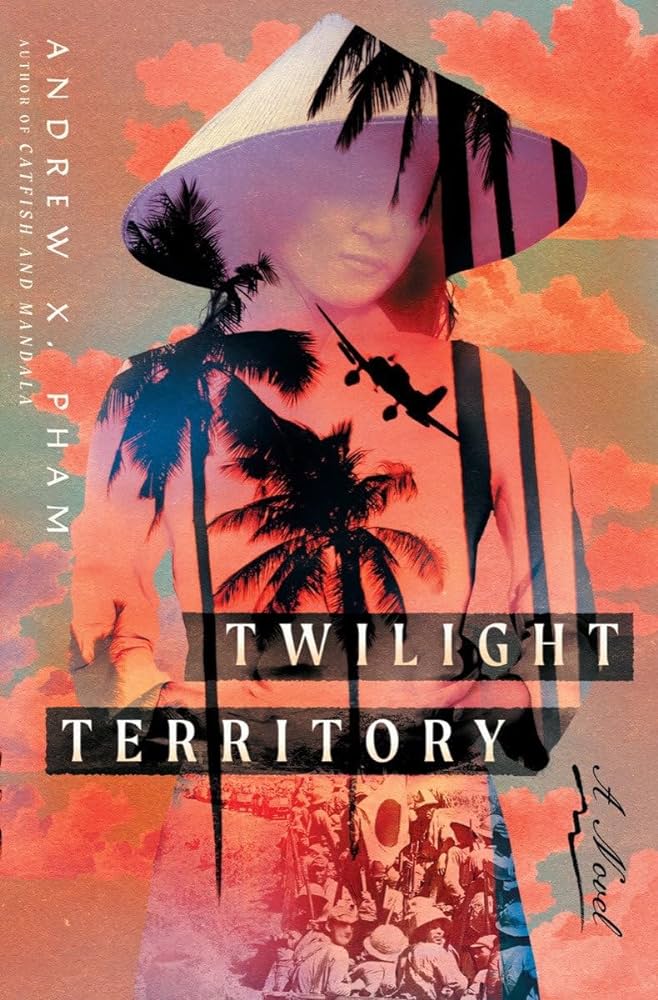
Fortunately, I made some better choices when it came to my recent reading selections. My Goodreads reviews of four novels that I read during the first quarter of 2024:


Have a good start to April, everyone!
Recommendations
China Stories
Chang Che, “The Aftermath of China’s Comedy Crackdown”
Joy Dong and Vivian Wang, “Why Are China’s Nationalists Attacking the Country’s Heroes?”
In October, shortly after Israel launched Operation Swords of Iron against Hamas in Gaza, a group of strangers met in a Taipei park. They represented a wide diversity of backgrounds: from Taiwanese activists and organizers to Israeli and Palestinian residents in Taiwan, from professional translators to high school and college students. But all were bound by shared concern over the growing number of casualties in the Gaza Strip and the relative silence from Taiwanese media.
The result was For Peace Taiwan (可以自由巴), a group of about 20 people sharing information about and advocating for Palestine. That includes translation work on social media, but also advocacy, protest organizing, outreach to local media, and the curation of Chinese-language resources on the history of Israel and Palestine.
Jordyn Haime, “Filling the Gaza Info Gap”
Ken Moritsugo, “Migrant workers who helped build modern China have scant or no pensions, and can’t retire”
Taili Ni, “Mother Tongues” — profile of writer Yiyun Li
One of the 2019 protest slogans — “Today’s Xinjiang is tomorrow’s Hong Kong”— sounded to me like hyperbole at the time. Now, five years later, it feels prescient. Today, it’s Hong Kongers who are disposing of dangerous books and T-shirts. Some people I know have quietly left an online chat group that includes foreign organizations and individuals; such contact could put the group’s Hong Kong members at risk. Others are quitting social media; tens of thousands have already left Hong Kong.
Maya Wang, “Hong Kongers Are Purging the Evidence of Their Lost Freedom”
Chun Han Wong, “Xi Jinping’s Historians Can’t Stop Rewriting China’s Imperial Past”
Wanderings Around the World
Eliot Brown, “Evan Gershkovich’s Stolen Year in a Russian Jail”
Miriam Jordan, with photographs and video by Rachel Bujalski, “Driving With Mr. Gil: A Retiree Teaches Afghan Women the Rules of the Road”
Katie Robertson, “‘Every Day Is Hard’: One Year Since Russia Jailed a U.S. Reporter”
Rob Rossi, “How 19,000 Jaromir Jagr bobbleheads were stolen and returned to Pittsburgh: ‘It’s like an Onion article’”
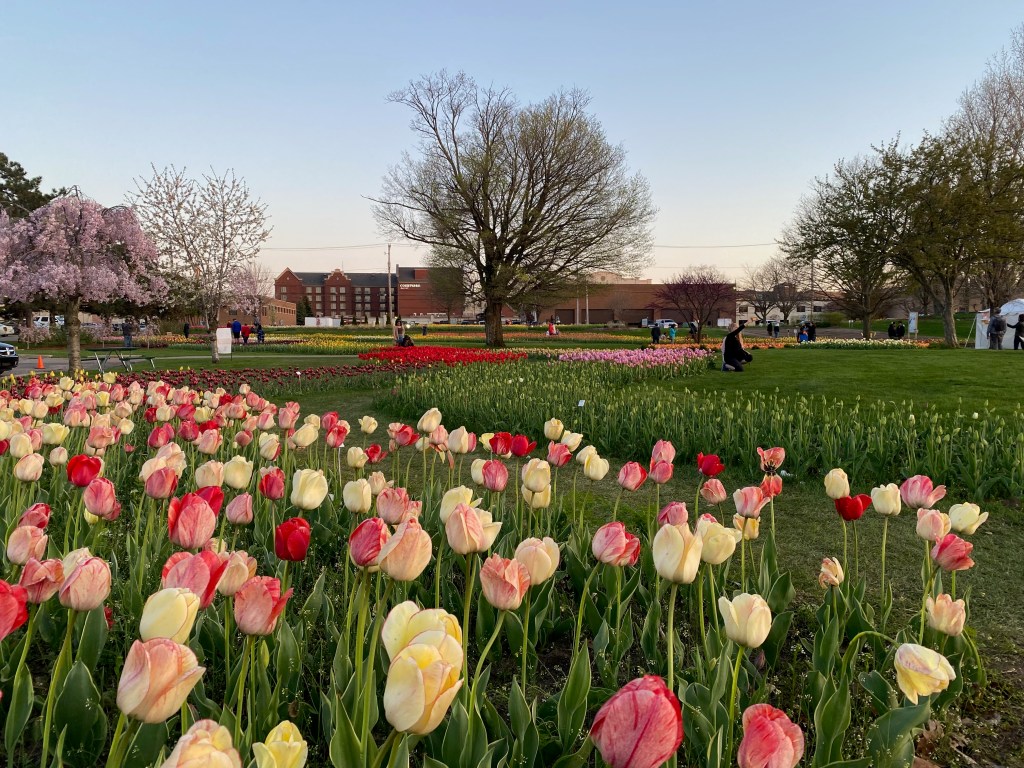
Featured photo: Tulip Festival in Holland, MI, May 7, 2022. This is how I always imagine Easter will look and feel, only to wake up to gray skies and temperatures just above freezing.
 Maura Elizabeth Cunningham
Leave a comment