In October, my parents and I spent a week in Williamsburg, Virginia. We’ve been there before, and have already seen the Colonial Williamsburg sights, toured the battlefield at Yorktown, and visited the reconstructed Jamestown settlement. Looking for something else to check out, I turned to the map in my National Parks passport and located Fort Monroe National Monument, just a short drive southeast in Hampton, VA. The National Park Service website described Fort Monroe as “Gibraltar of the Chesapeake,” explaining that in addition to being an important coastal defense, it was also the site where John Smith had landed, the place where enslaved Africans had first arrived in 1619, and the location of “Freedom’s Fortress” during the Civil War. Not entirely sure what to expect—would there just be a plaque on the waterfront?—but game for an outing, my mother and I drove down on a sparkling Wednesday afternoon.
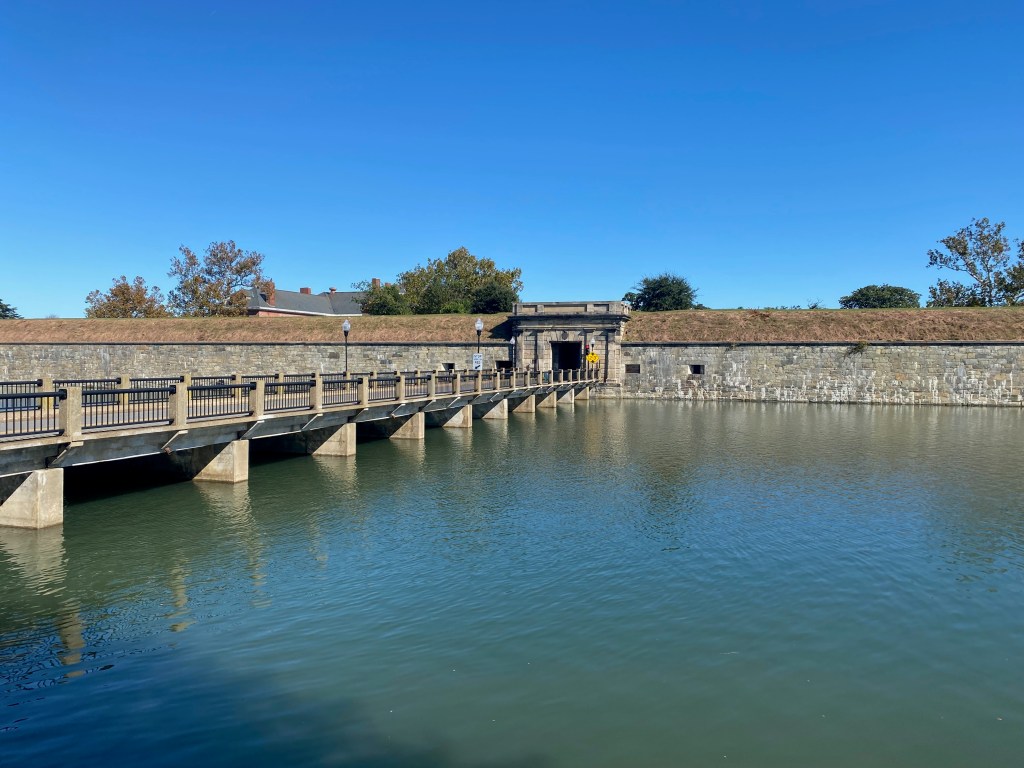
Fort Monroe offered far more than a plaque to see. Exiting I-64, I drove us through the tiny town of Phoebus, then crossed a short bridge to approach the fort, a misshapen star of an island surrounded by a moat and fortress wall. On the website I had seen references to the “Casemate Museum,” inside an old military arsenal, so that seemed like the place to start. Upon parking, though, Mom and I realized that we were supposed to begin at the Visitor’s Center, back on the other side of the moat, where we could pick up the free tickets required for admission to the museum. We left the car and started walking back the way we came.
The island was quiet; we saw few other people except a small crew that appeared to be filming a documentary. Fort Monroe was in use as a military base until being decommissioned in 2011, and its streets are lined with mid-twentieth-century military quarters. Some of the houses and apartments are occupied (anyone can lease a residence at Fort Monroe), while others stand empty, their structures showing signs of time and neglect.
The Visitors Center contains a thorough two-room exhibit of the region’s history and the construction of Fort Monroe. It gives significant attention to the importance of “Freedom’s Fortress”: in May 1861, three enslaved men arrived at the fort and sought refuge with the Union troops that held it. While the Fugitive Slave Act of 1850 dictated that the men should be returned to their enslavers, Union Major General Benjamin F. Butler offered his own interpretation of the law. The Confederacy was in rebellion against the government that had passed that act, he said—the slaveholders could not secede and yet also demand that the Union recognize them. Stating that he had the right to prevent enslaved labor from benefiting the Confederacy, Butler declared the men “contraband of war” and provided them safe harbor at Fort Monroe. Through this action, he also set a precedent that enabled countless other enslaved people to seek protection with Union troops.
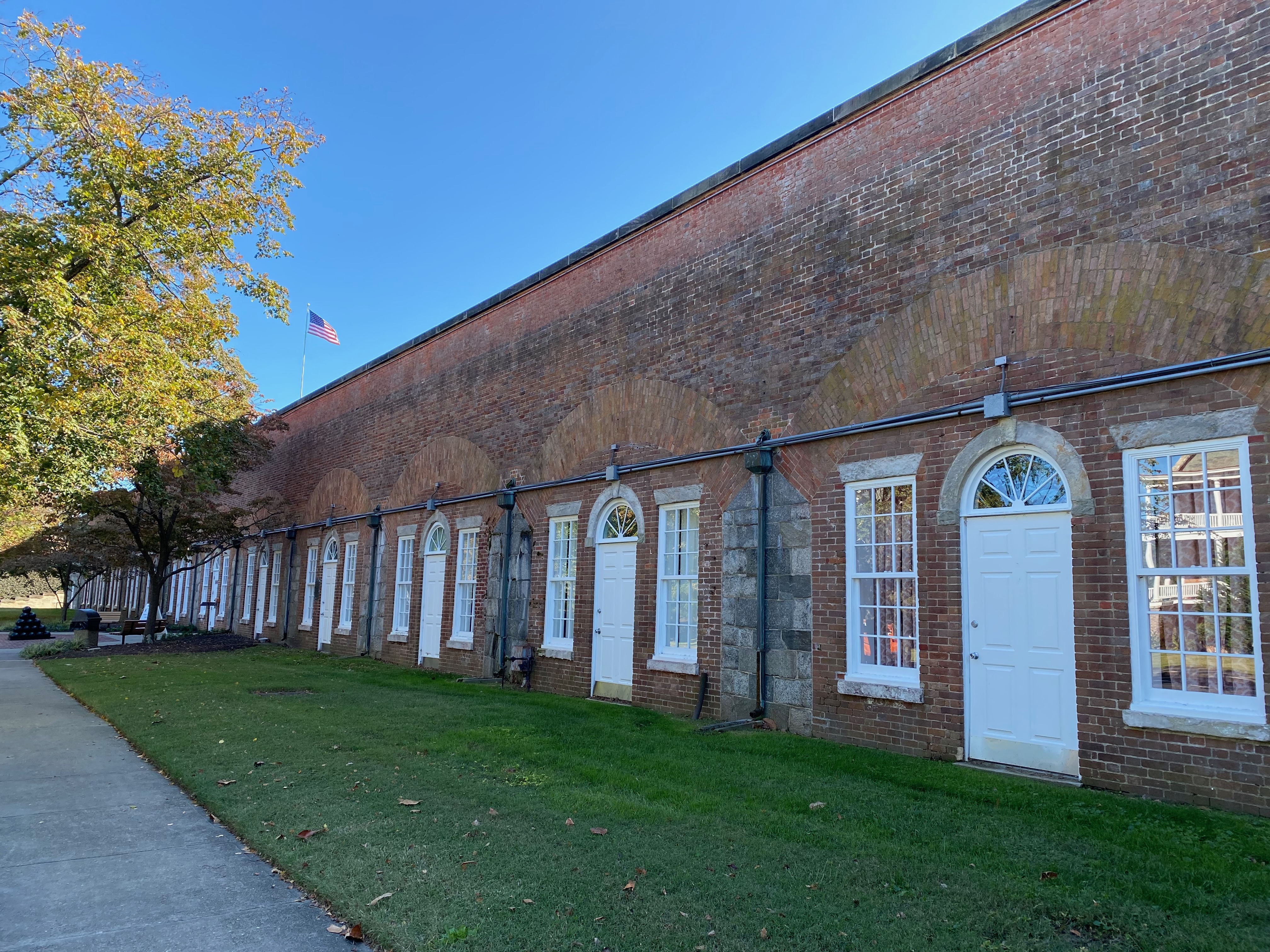
Mom and I finished at the Visitor’s Center and walked back to the Casemate Museum with our entry tickets. The museum is a bit of a hodgepodge: in addition to extensive exhibits on military hardware and the logistics of defending the Chesapeake (which we mostly skipped), it also highlights the history of the Hampton area as a vacation destination, talks about life in the military and recovery for soldiers returning from war, and features reconstructed rooms showing what it was like for officers and their families to live in the casemate.
We were most interested in the room in which Jefferson Davis was imprisoned following the fall of the Confederacy—decorated with a massive American flag that stretched from floor to ceiling, which must have been vexing for Davis to confront. The museum placards explained the dilemma the U.S. government faced in deciding if or how to prosecute Davis for treason. As Jill Lepore wrote in a recent New Yorker article, the eventual decision to set Davis free continues to resonate in American law and politics: “If Davis had been tried and convicted, the cloak of Presidential impunity would be flimsier.”
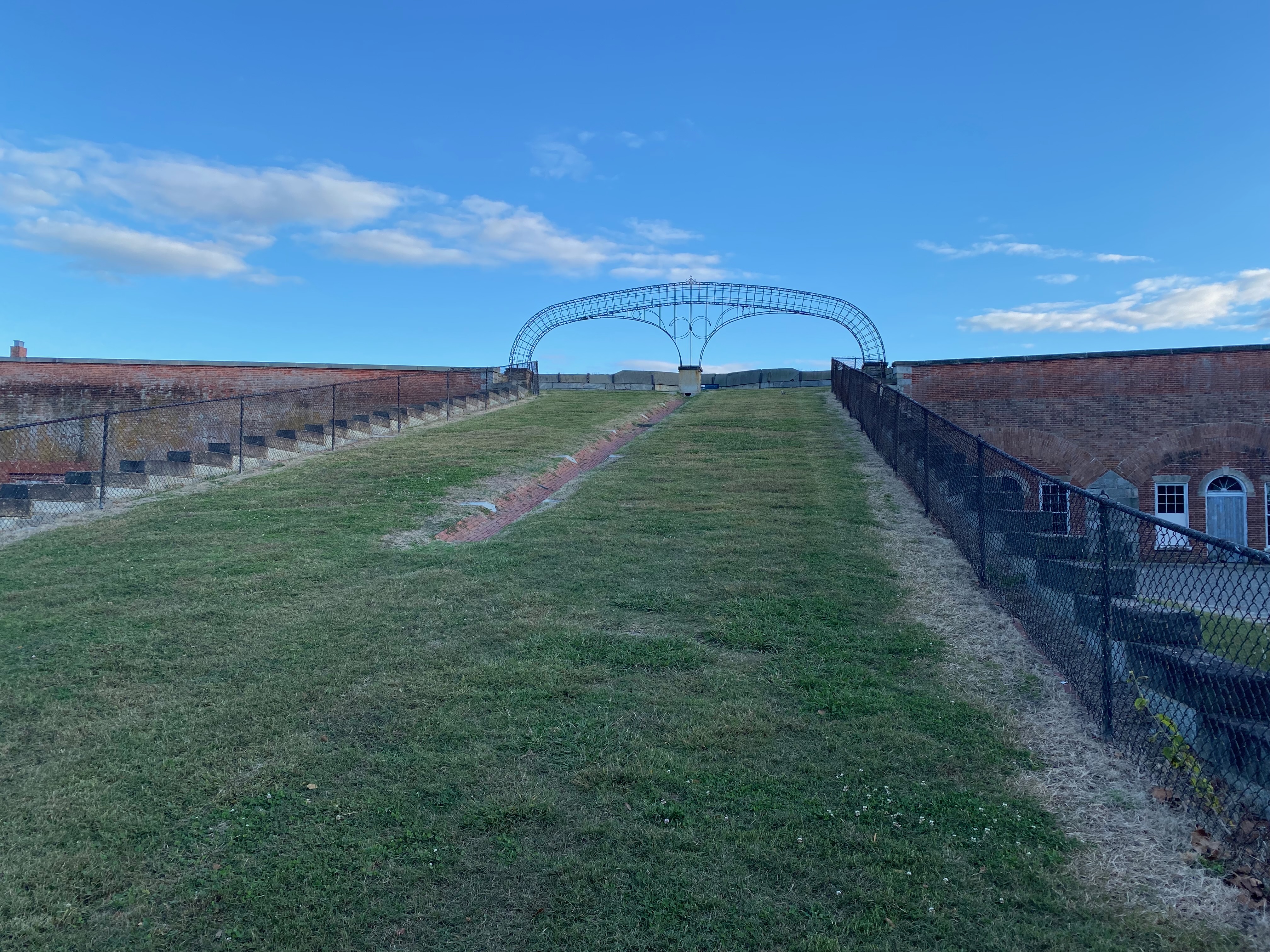
Jefferson Davis died in 1889, but remained a symbol for those who promoted white supremacy and opposed civil rights. After leaving the Casemate Museum, Mom and I continued walking around the island; we soon encountered a small hilly park with a curious arch atop its peak. A sign nearby showed the arch in a previous incarnation, when it displayed the name “Jefferson Davis Memorial Park,” established 1956 as an expression of public opposition to desegregation. On the island renowned as “Freedom’s Fortress” stood a tribute to one of the leaders in the fight against that freedom. The name wasn’t removed until 2019, shortly before the 400th anniversary of when the first Africans arrived in bondage at the nearby waterfront.
The sun was lower in the sky as Mom and I climbed a small staircase to the top of the wall encircling Fort Monroe. We walked partway around on a concrete path edged with tombstones for pets that once belonged to military families stationed at the fort. From our vantage point, we could see the houses and lawns spread out on the island below, the whole scene sleepy and still. Away from the pulsing tourist activity of Williamsburg, Fort Monroe feels almost forgotten, a footnote to the more well-publicized and commercialized history found elsewhere. But over the past 400 years, this small spit of land at the edge of Virginia has seen it all: violence and conquest, enslavement and freedom, terrible war and halting reconciliation.
Feature Photo: Entrance to Fort Monroe, Virginia, October 18, 2023.
 Maura Elizabeth Cunningham
Leave a comment