No commentary and only a few recommendations from me today because for the past week I’ve been mostly occupied with preparing for and then attending the Midwest Conference on Asian Affairs. It’s been years since I’ve written and presented a conference paper based on original research, and happily I haven’t forgotten how to do so—but I did forget how exhausting the process can be.
Recommendations
China Stories
Sebastien Lai, “‘Don’t Be Scared,’ My Father Said Before He Was Led Away in Hong Kong”
Jonathan Landreth, “Understanding Beijing’s data lockdown: Q&A with Mu Chen of Baiguan”
Joshua Yang, “Hong Kong’s Bureaucrats Don’t Make Good Authoritarians”
Wanderings Around the World
Haiane Avakian, “Bakhmut, Before It Vanished: The world first heard of my hometown only after Russia destroyed it.”
Joseph Menn and Gerry Shih, “Under India’s pressure, Facebook let propaganda and hate speech thrive”
Elizabeth Williamson, “America’s Black Cemeteries and Three Women Trying to Save Them”
Standout Story
About a decade after the rise of online feminism in China, its influence is at once undeniable and ambiguous. In several arenas — elite politics, labor participation, income equality — the position of Chinese women is slipping. #MeToo posts also no longer carry any hope of systemic change. Court decisions favor alleged harassers and no Chinese university has announced anti-sexual harassment measures.
But support for women’s rights issues appears only to have grown. By numbers, China’s online feminism is bigger than ever.
Wanqing Zhang, “Heavily persecuted, highly influential: China’s online feminist revolution”
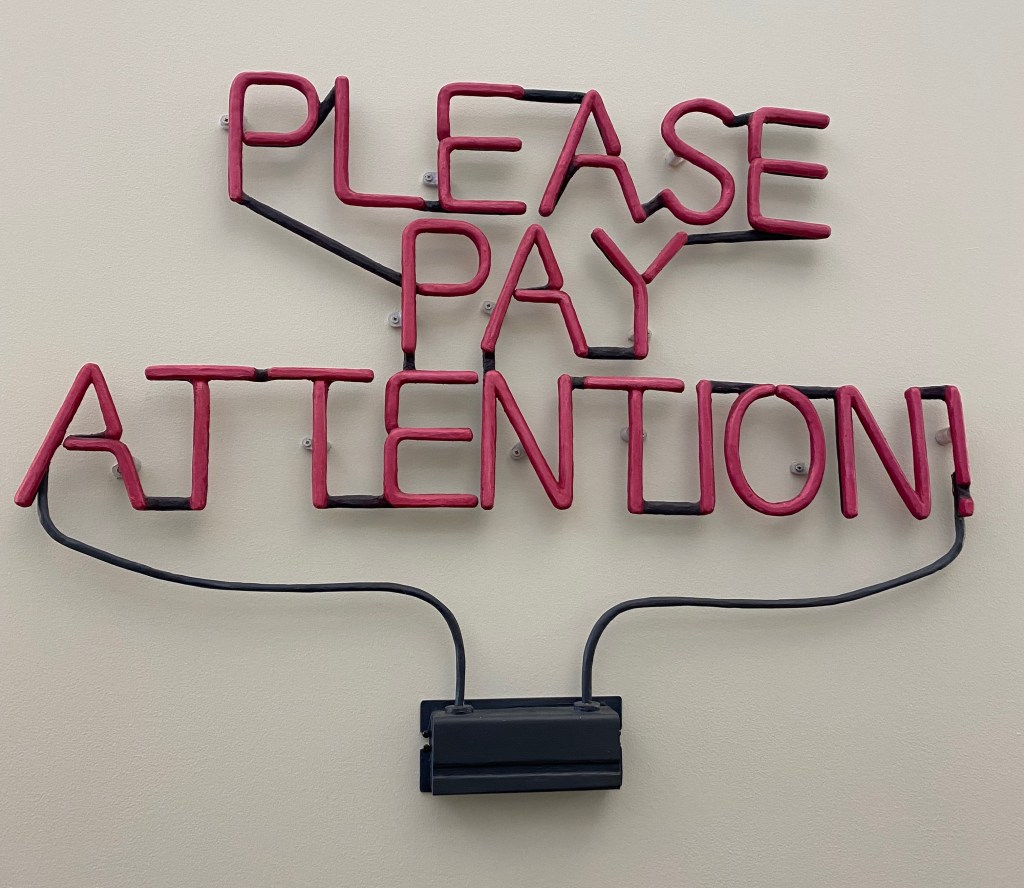
Feature Photo: Conrad Bakker, “UNTITLED PROJECT: SIGN [NEON] [PLEASE PAY ATTENTION]” (2009), on display at the Illinois Conference Center, Champaign, IL.
 Maura Elizabeth Cunningham
Leave a comment